
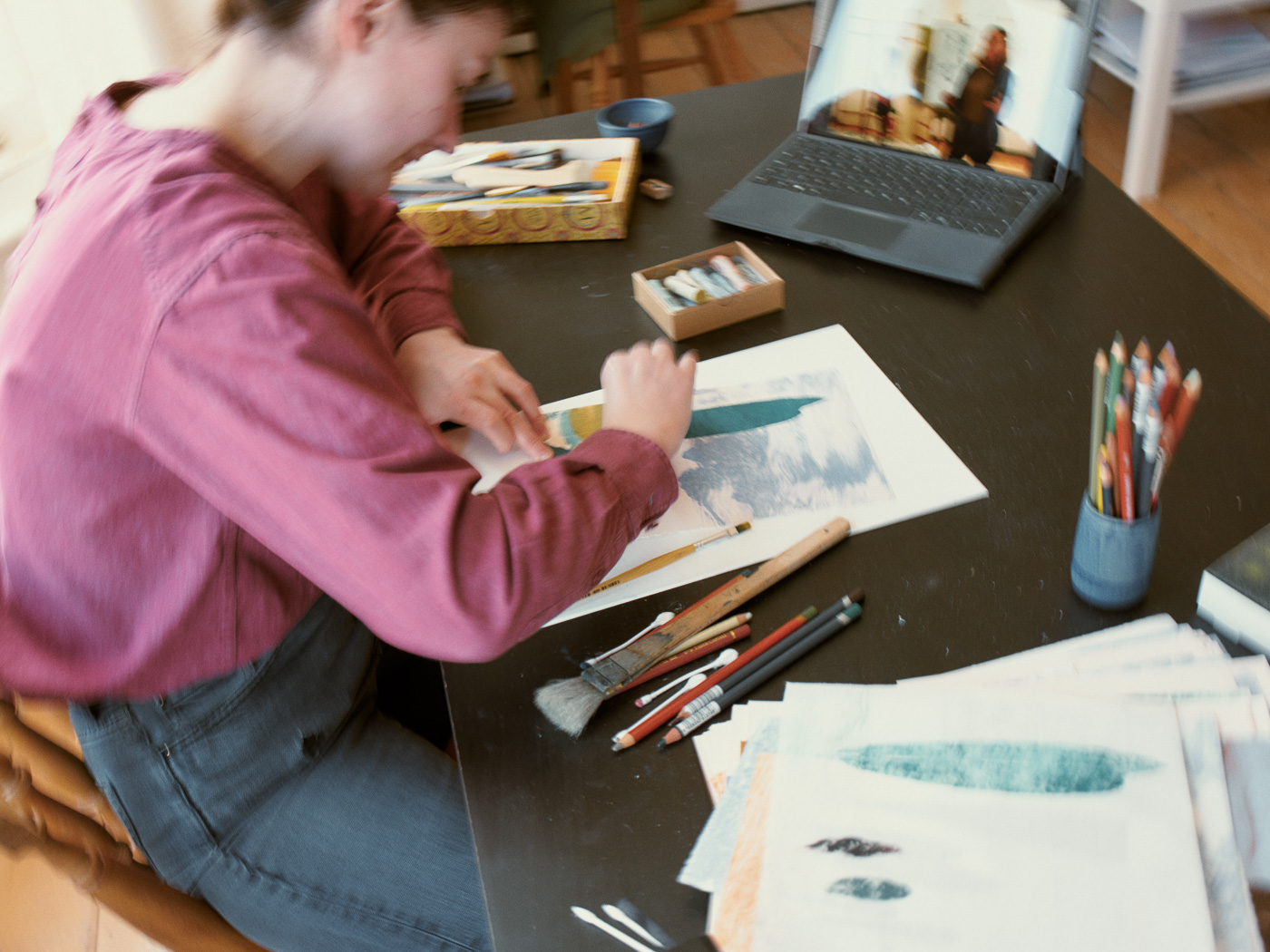
In a market full of short, pre-recorded drawing lessons, the Royal Drawing School has taken a very different approach with its online learning. The majority of our live online courses run between three and seven hours per session and keep groups small and immersive. We sat down with our School Director, Harrie Parker, to explore how this long-format approach fosters artistic growth, builds community, and brings the energy of the studio into the digital space.
The School’s 5-& 10-week online courses are notably longer than most, running between three and seven hours per session. What inspired this long-format approach to online teaching?
When we first started thinking about online courses, we didn’t want to simply create short, bite-sized sessions. Drawing, at its heart, is a practice that benefits from sustained focus and immersion. The long-format sessions allow students to observe, experiment, and develop ideas over a meaningful period of time, much as you would in a studio. It’s less about ticking off exercises and more about creating space for discovery and learning approaches and skills that can support your wider creative practice.
Why is maintaining a fully live experience so important to the School’s teaching philosophy with these long format online courses?
The live element is absolutely central. Drawing is a dialogue, between the tutor, the model, and the student. In a live session, tutors can respond, guide, and adapt to what each student is doing in real time. Students can also ask questions, share work, and see how others approach the same challenge. That immediacy is what keeps the sense of a real, connected studio alive online.
Many online platforms prioritise scale, but your cohort sizes remain intentionally small. What benefits do you see in keeping groups intimate?
Small cohorts create a space where students feel seen and supported. Tutors can give focused feedback, and students feel confident sharing their work and experimenting. There’s a sense of community that naturally develops. The community as a whole – tutor, students, and sometimes a model - bring so much to the experience and create collaborative learning.
Importantly, small cohorts enable friendships and artistic connections to form, students really get to know one another, which adds another layer to the learning experience.
How do tutors adapt traditional studio practices to a digital environment while still maintaining depth and rigour?
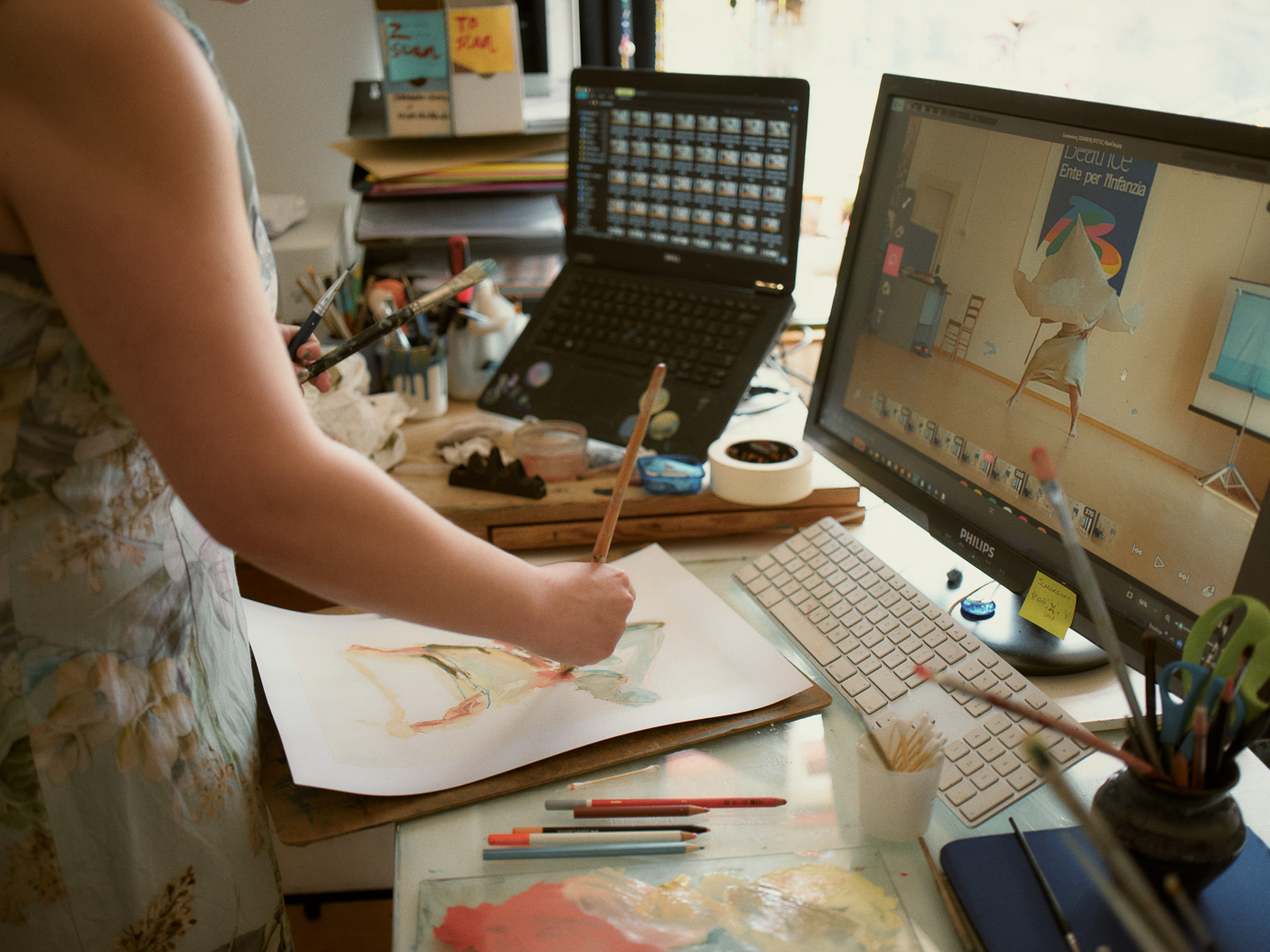
Our tutors are practising artists first, they bring their own methods and observations to each session. In adapting to digital, they lean on visual demonstration, close observation, and live feedback. The key is not to dilute the practice but to translate it thoughtfully: we emphasise sustained observation, responsiveness, and the iterative nature of drawing, so students develop both skill and critical insight
In what ways does the School ensure online students receive the same level of personal attention and constructive feedback as those learning in person?
Because our groups are small, tutors can engage individually with every student, commenting on technique, approach, and ideas throughout the session. Students upload work during the class, which allows us to give targeted, immediate feedback. For those looking to take their practice even further, our 3-month Drawing Intensive (online or in-studio) and the 1-year Online Drawing Development Year provide even more tailored guidance in the form of guided mentoring, as well as the chance to curate a personalised programme.
What kinds of artistic development thrive in this extended, immersive structure?
Students often develop a deeper observational acuity and patience. They experiment more freely, take risks, and explore ideas fully, rather than rushing towards a “finished” drawing. You also see a growth in confidence, both technically and creatively, as the extended sessions allow repeated practice and reflection.
Many students report breakthroughs in how they see and interpret the world, which then informs their work across other media as well.
Looking ahead, how do you see the School’s online teaching evolving? Are there new elements you hope to introduce?
Looking ahead, we want to encourage our online students to take that leap into a 3-month or 1 year course online course. We know what happens when drawing moves so centrally in an artist’s practice.
Of course, we recognise that not everyone can commit to that schedule. For those with limited time, we offer one and two-hour live Digital Studio sessions most Monday lunchtimes and evenings. These are led by a tutor and involve a model. Our aim is always to provide options that fit different schedules, while still preserving the interaction, insight, and sense of community at the heart of our courses.