
Where
Any well-lit table or desk, with white or coloured paper.
Materials
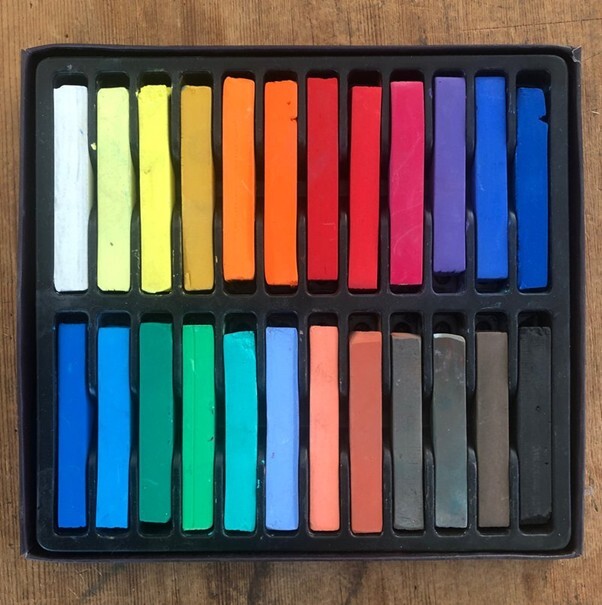
A small set of chalk pastels (around 24, or fewer to begin), paper (white or coloured), optional colour wheel.
Terms
Optical mixing is the technique of layering or placing lines or strokes of different colours very close together so that, when viewed from a distance, they visually blend into a new, more vibrant colour.
Steps
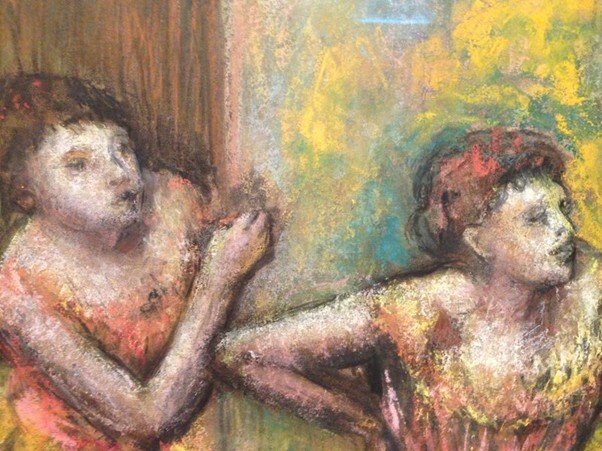
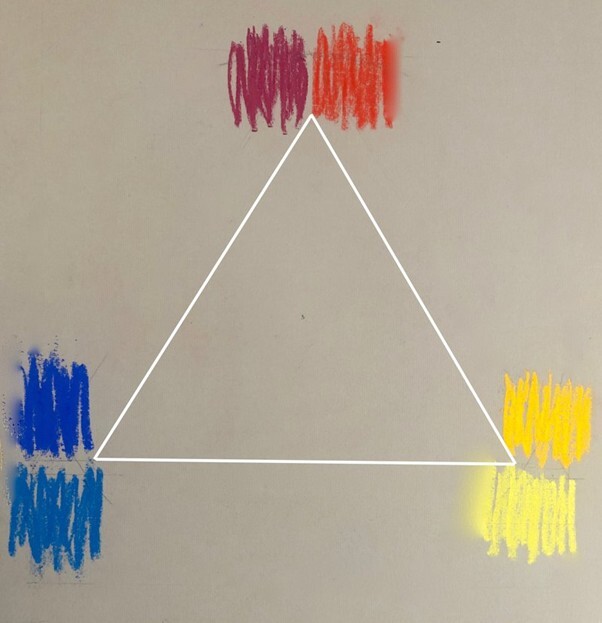
- Start with the primary colours: red, yellow and blue, and include two versions of each with a warm or cool tone: yellow-red, orange-yellow, green-yellow, green-blue, red-blue, blue-red, see Image 1.
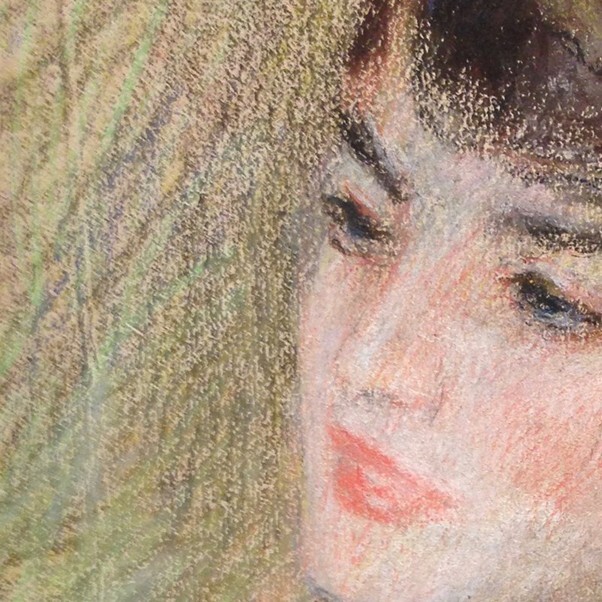
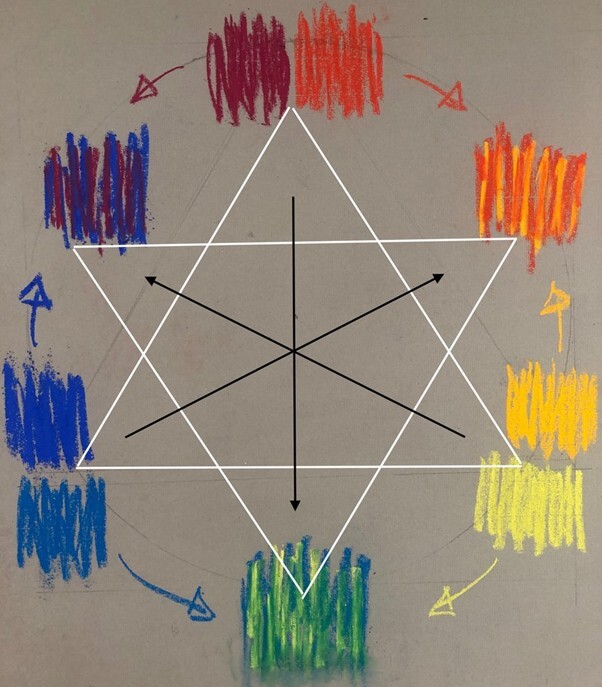
- Optically mix your secondary colours: orange, green and violet by lightly overlaying the two appropriate primary colours which you can see in Image 2. Optical mixing gives clean, vibrant colour instead of muddy smudging.
-
Note the primaries are the opposite their secondaries. These make complementary pairs: red and green, blue and orange, yellow and violet. Observe the contrast when placed or layered near each other.
-
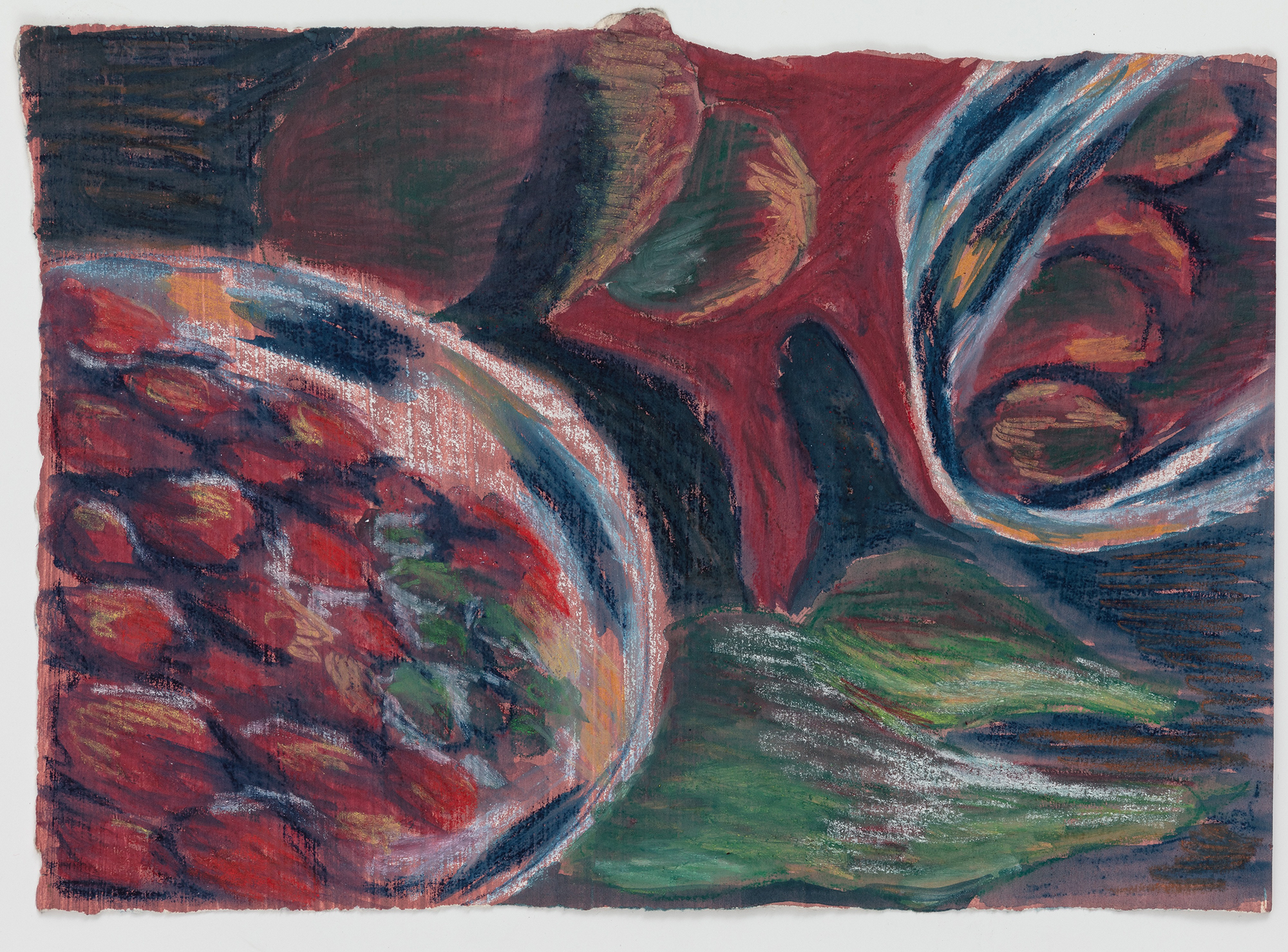
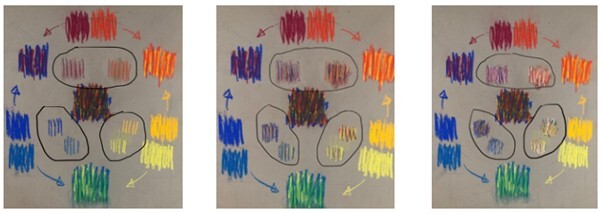
Make browns by mixing the three primary colours together in varying proportions, which you can see in Image 3.
-
Make coloured greys through optical mixing. First use a lighter touch so the paper’s ground shows through. Then try including small amounts of other primaries, and finally include white to adjust value, which you can see in the image below. This works on coloured or white papers.
Keep your touch light, compare results, and notice how paper colour, pressure and order of layers affect the outcome.