Everything is related Drawing exercise
One of the biggest challenges in teaching life drawing is encouraging students to relate the model to their surroundings, and to the sheet of paper they are working on. What often happens when students are left to their own devices is a set of drawings of an isolated life model floating in a void: no sense of scale, no sense of how far the model is from the person drawing them, and no sense of the space within the room. No sense, in short, of being there.
Just as we never see colours in isolation, but in relation to other colours, we only see objects in relation to the whole. The ‘whole’ being, whatever is within our line of sight.
In his book 'Cézanne’s Composition', Erle Loran writes:
“The invariable experience I have with new students in the life class who come with a background of conventional art-academy training in life drawing. When the students are told to organise the entire space, the human figure and its surroundings, to relate it to the format (i.e. the size and shape of the surface being drawn on), to the picture plane, the first results are usually a total loss of the slick finish in the figure drawing and a general clumsiness that belies the previous training.”
The process Loran describes, can be very unnerving. As soon as you start trying to draw the whole room, not just the figure, the figure can lose its slickness. The drawing may suddenly look clumsy, as if the skills you relied on have disappeared. But that collapse of facility is a good sign. It means you are no longer polishing the figure in isolation and are beginning to organise the whole space instead. If you consider the space and continue your drawing across the entire sheet of paper, the whole sheet becomes animated, and the lines that run to the edge imply a world extending beyond it.
Having said all that, almost all life drawings are of a single model. The exercise I want to suggest is to make drawings from existing art and specifically to draw at least two figures in relation to each other. You don’t have to draw the whole painting but oddly enough you may find that helps.
Materials
- A4 paper
- Pencil and eraser
- A laptop or tablet to view reference images
- Optional: real people to pose for you
Objective
Make a drawing containing at least two figures, focusing on how they relate to each other and to the overall space.
Method
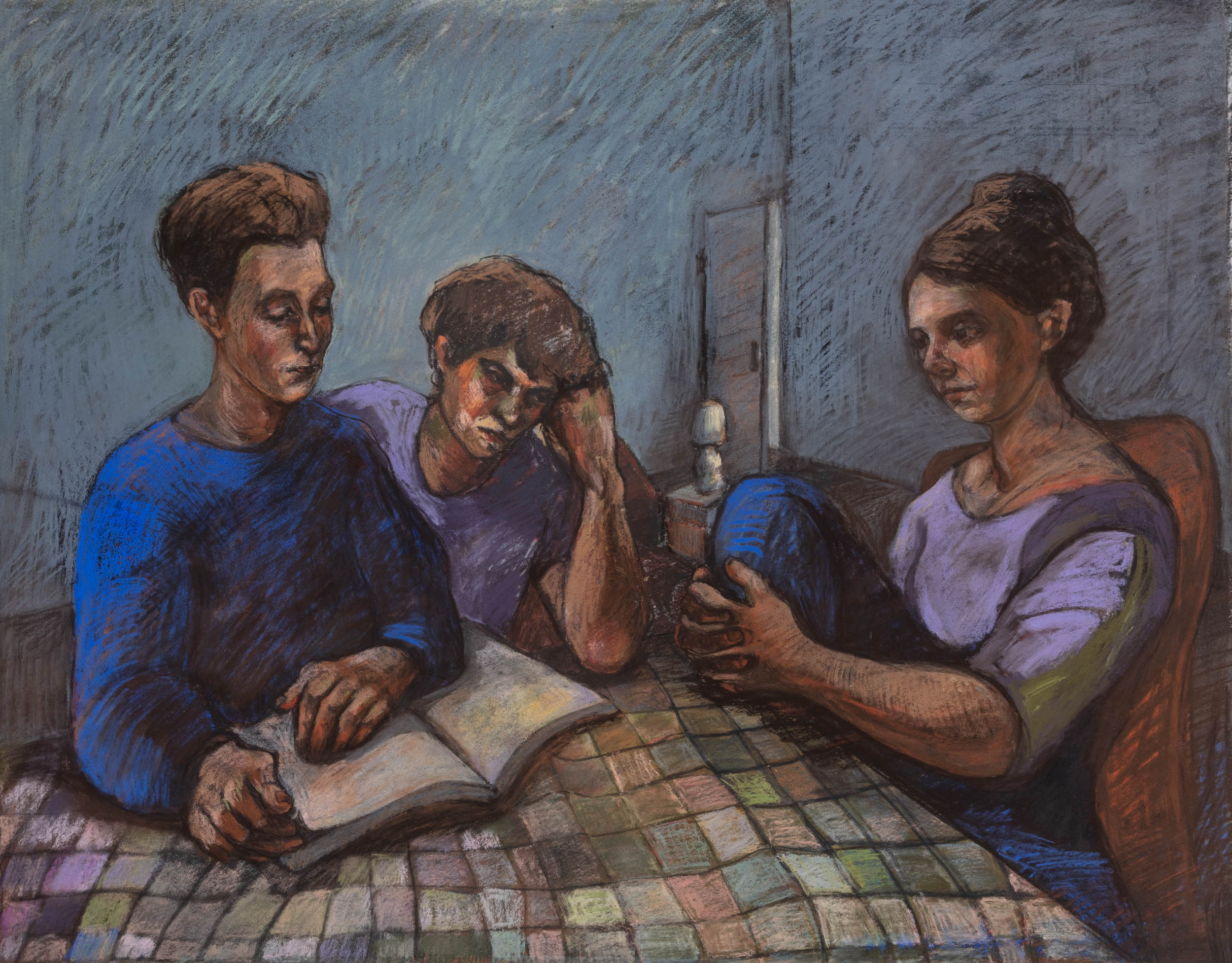
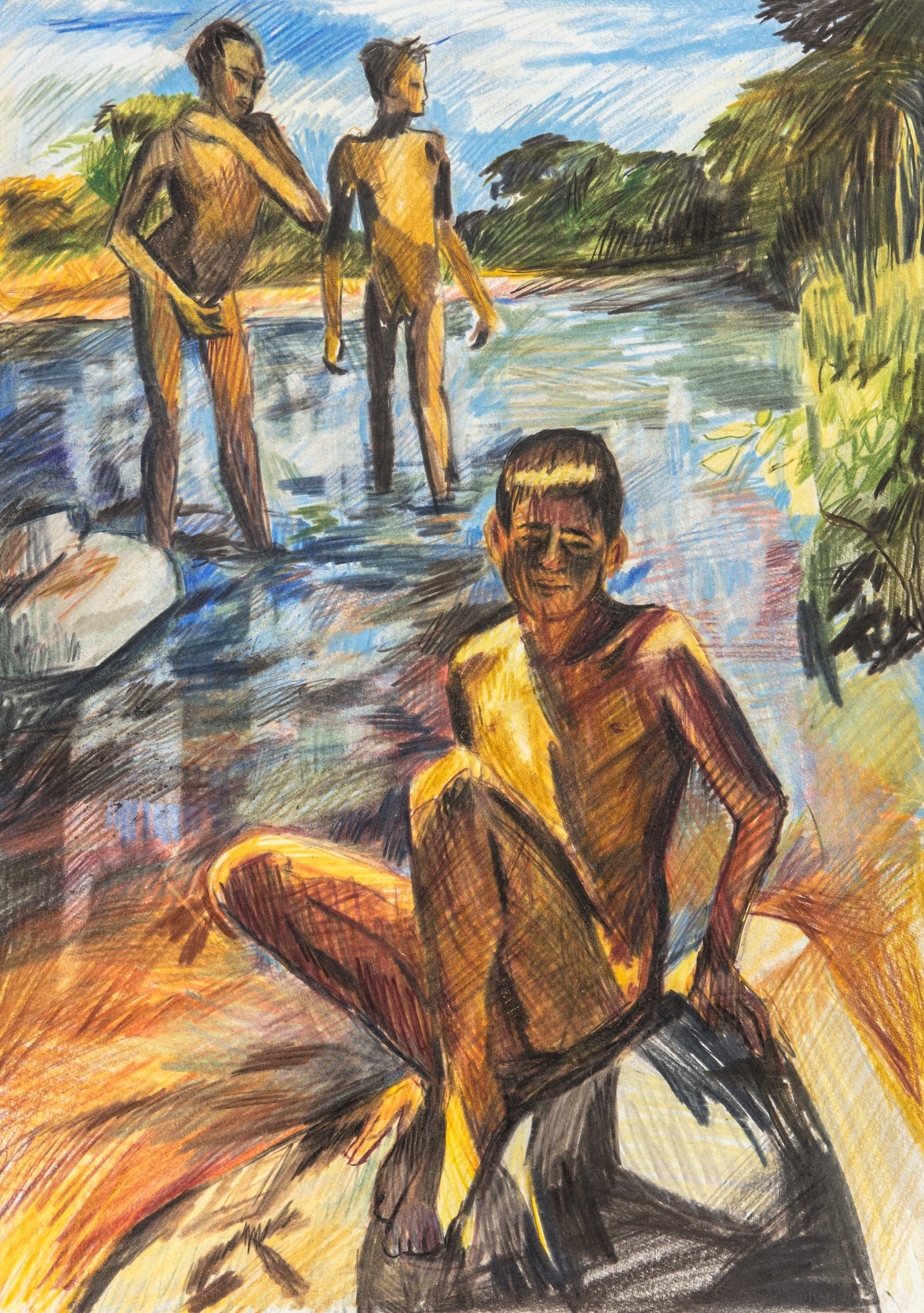
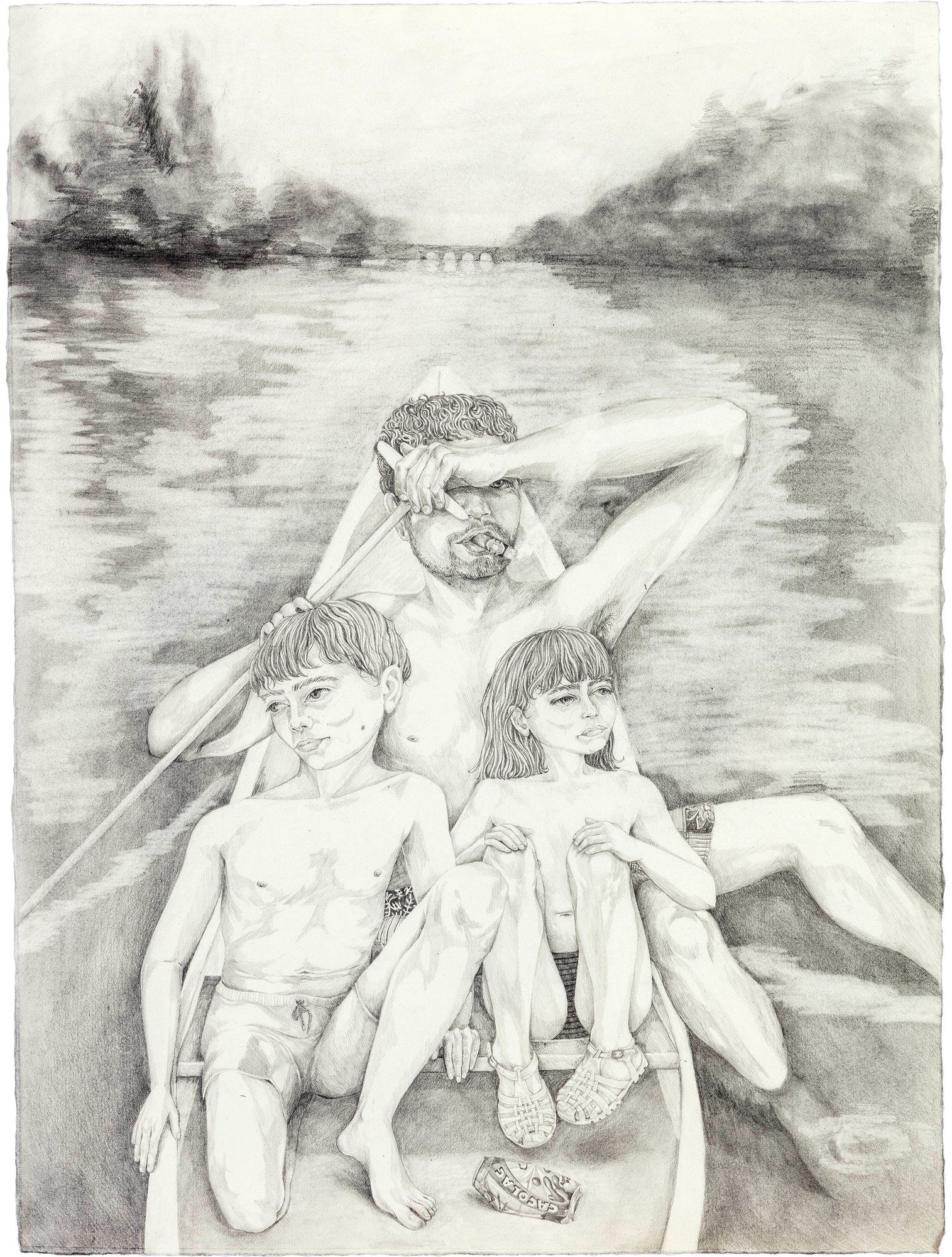
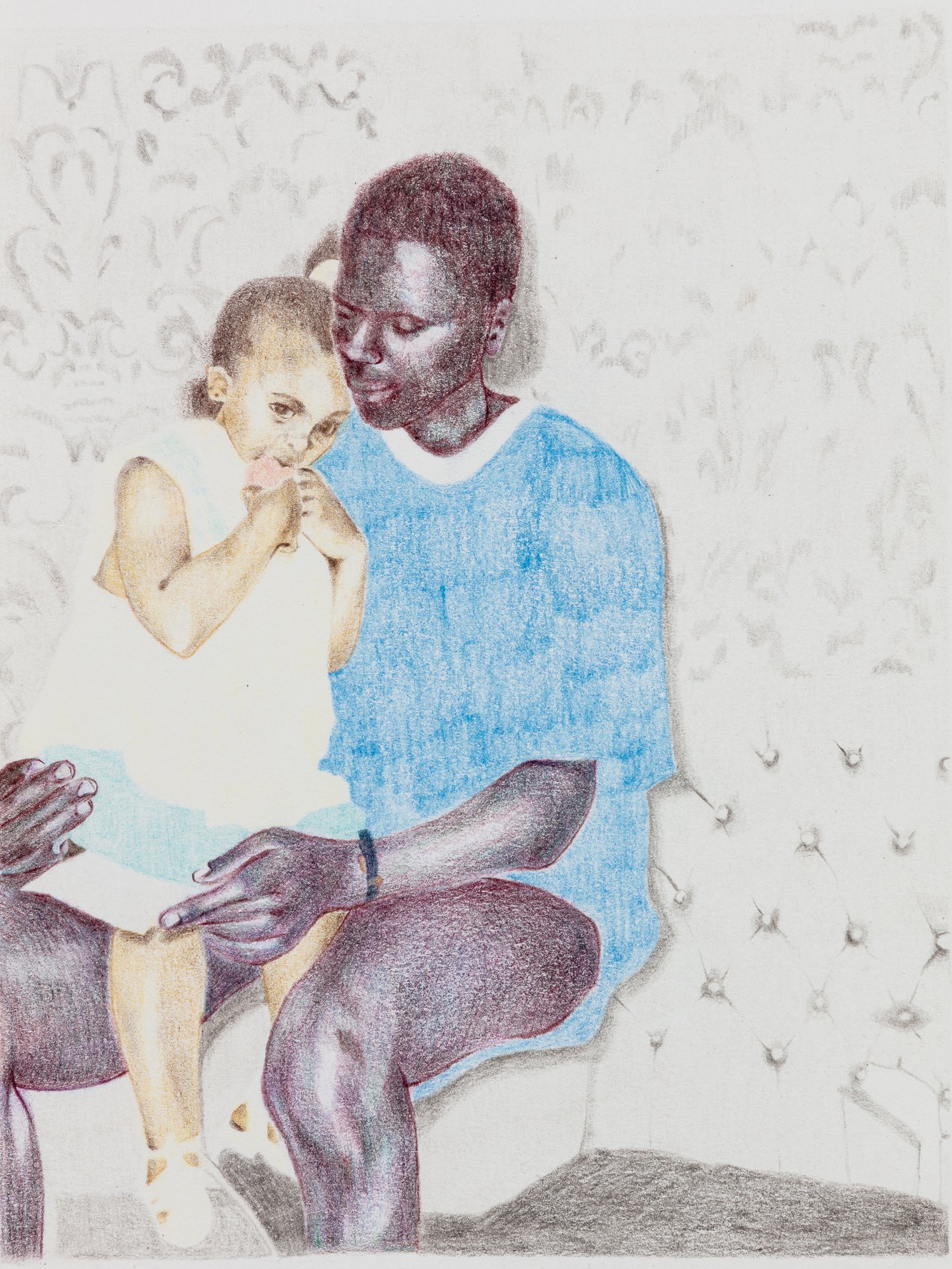
Choose an existing artwork that contains at least two figures within a space. You are welcome to take inspiration from one of our Drawing Year students’ artworks found on this page. The National Gallery also has an expansive online archive of artworks that you can draw from. Or, if you are lucky enough to have friends or family pose for you, you can work on your figure composition with them.
Approach 1: Draw the figures together
Draw the figures concurrently, rather than drawing one figure first and then adding another.
Move back and forth between the figures as you draw. It could be as simple as deciding to make three marks for one figure before making the same number of marks for the other. If you are drawing multiple figures, think ‘pass the parcel’. Or spinning plates.
This keeps both figures active in your mind and prevents one from becoming dominant or over-finished.
Approach 2: Draw the negative shapes
Pay attention to the spaces between the figures, the shapes of air, gaps, and overlaps.
You can even begin your drawing with these shapes. If you draw only negative spaces, you may find the figures emerge by themselves. Seurat’s Bathers is an excellent example to study for this.
After the exercise
Look up drawings by Paul Cézanne or Leon Kossoff, especially their studies after Peter Paul Rubens. What might first appear clumsy or childlike often reveals itself to be profoundly sensitive, full of precision and presence. Here, “precise” means not tidy; it means capturing the experience of being there.
Drawing with a sense of the whole, the full space, not only the figure, can help connect you more deeply to your work, and perhaps even to the world around you.
Featured artwork:
Kate Walton, 'Hampden Road', Pastel on paper, 2023