When my grandparents arrived in the UK, from far-flung corners, none of them were in the pursuit of creativity. Soviet incursion into Hungary caused my grandfather's parents to send him away, and he met my grandmother in this country, who left India during the collapse of the Raj. My father's parents came from the Caribbeans, as part of the Windrush Generation, to fill the post-war labour deficit in England.
Not one of them returned to their homelands, and while they built lives for themselves, I can imagine that creative expression was the least of their concerns (for themselves, or for their children). I suppose, then, that my path as an artist was born out of something idiosyncratic and through the stability of second-generation immigrant experience.
I have used drawing as a tool to examine the African diaspora for some time now. From sketching the Nigerian archives of the British Museum to contextualising mixed-race identity within a contemporary London— one of the things that drawing has allowed me to investigate is my heritage. Like my grandparents (and their children), I had never returned to the Caribbean, Central Europe or Asia. I suppose, in some sense, I had become cocooned by the UK, in its institutions and its particular blend of globalised art culture.
When the Royal Drawing School invited me to travel to Antigua and Barbuda as part of a teaching residency, I didn’t just see an opportunity to travel, teach and expand my practice, but also a chance to get a bit closer to the tangled roots of my family's past.
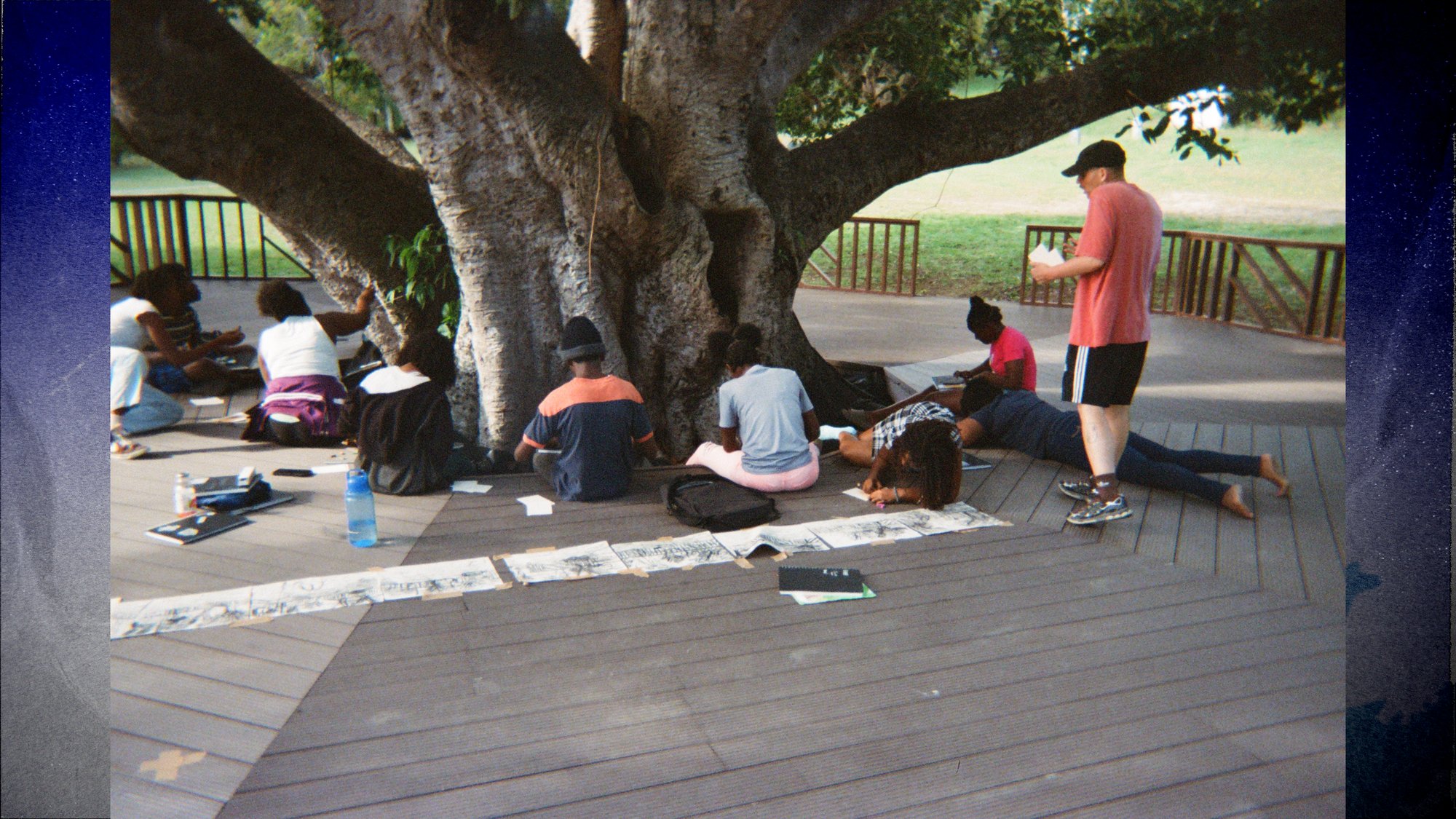
Drawing has taken me all over my home city, London, and up and down its class ladder, but it had never taken me abroad before. I was nervous, but my artist friends from the school encouraged me to face the adventure head on. I decided that I would engage Antigua, and its people, for all that I might learn from them.
One of the themes in my drawings, for some time now, has been 'apocalypse' and the idea of systems which end by transforming into new ones. The support staff in Antigua, who welcomed me as a friend, would often speak to me about these cycling phases in their country and the wider region. I was grateful for their openness and the ease with which they engaged tricky topics.
My main point of contact, Rozanne, spoke to me about the major tectonic activity underneath the Caribbean and the destruction wrought upon Barbuda by hurricane Irma. Mason always made sure to point out to me new construction developments, an expanding highway and a new university hospital. Others talked to me about the pace and ambition of the East Caribbean dollar. While I worked with the students and meditated on my own practice, it occurred to me that Antigua was still in the wake of a great transformation which must have been underway since its realisation of independence under Vere Bird, who sat as a heroic, colourful bust in the centre of Saint Johns.
I thought about how far the African diaspora had spread, and my place within it. The students and staff I worked with were so fundamentally positive about the future of their country, despite its harrowed past and nationally existential threats presented by climate change. This was something that I felt I could learn a lot from. It made me think about how my ancestors, who were taken from Africa to the Caribbean, may very well have already experienced their apocalypse, and how we were all living in the turning and wheeling of a new cycle.
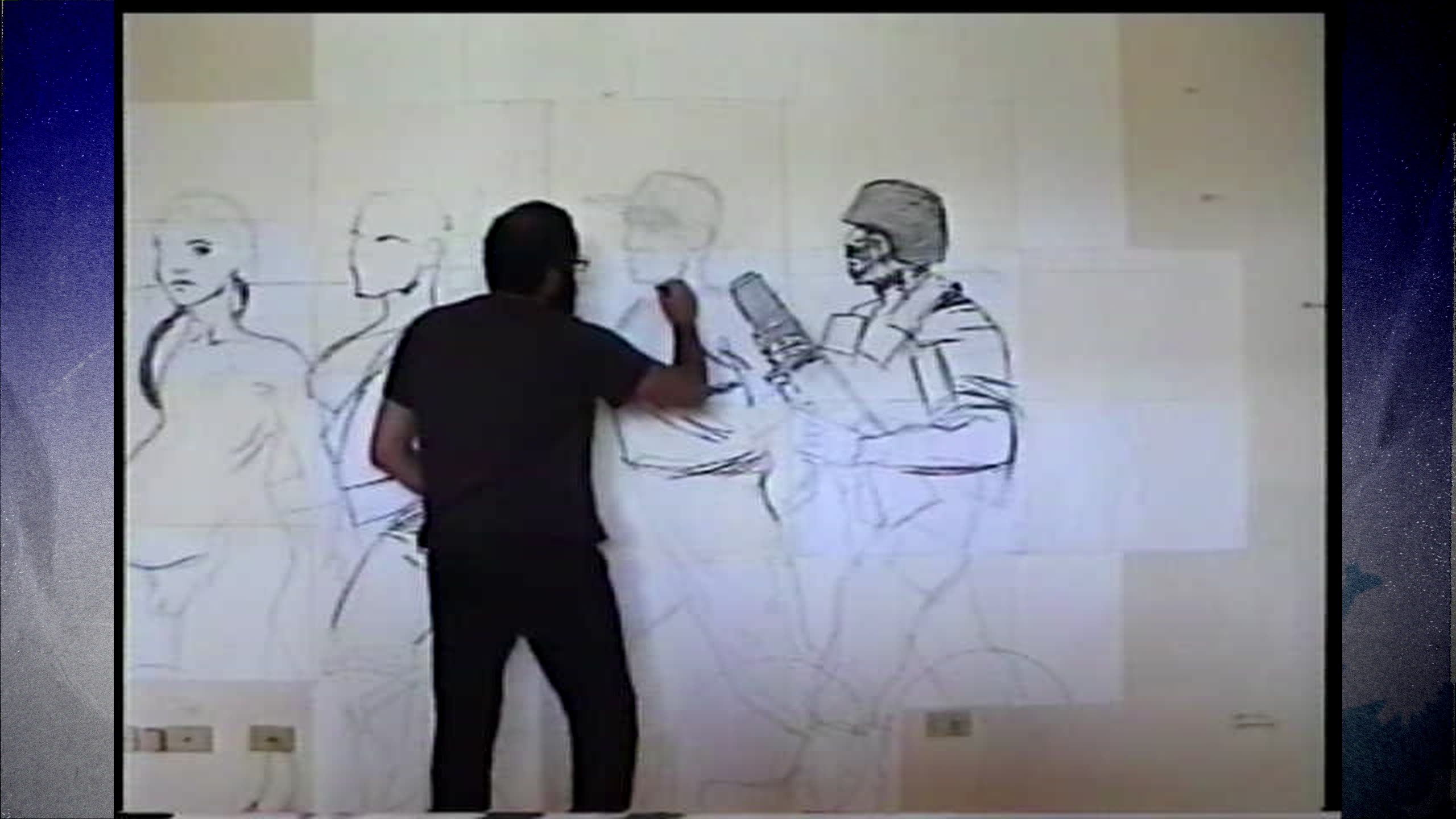
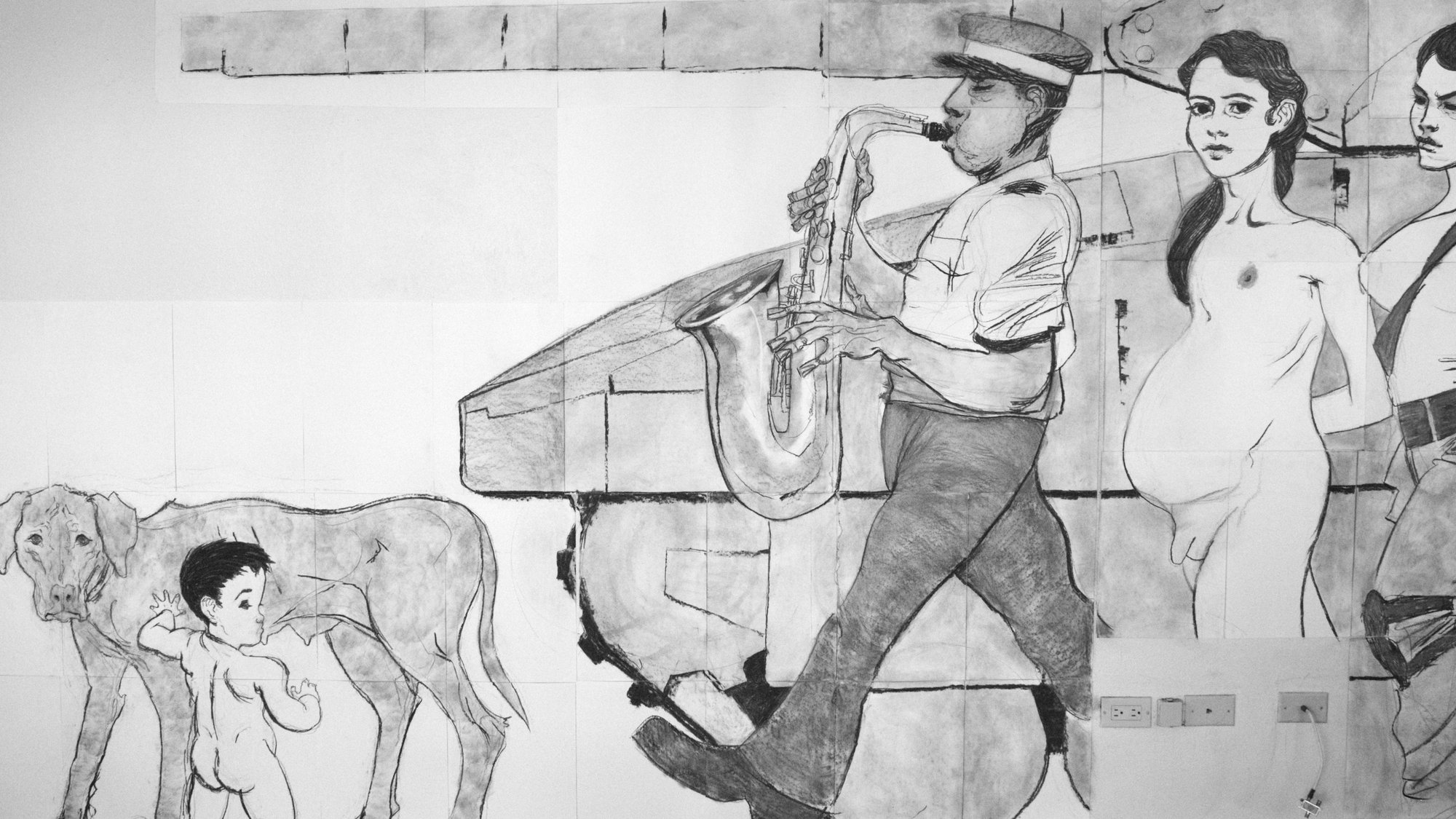
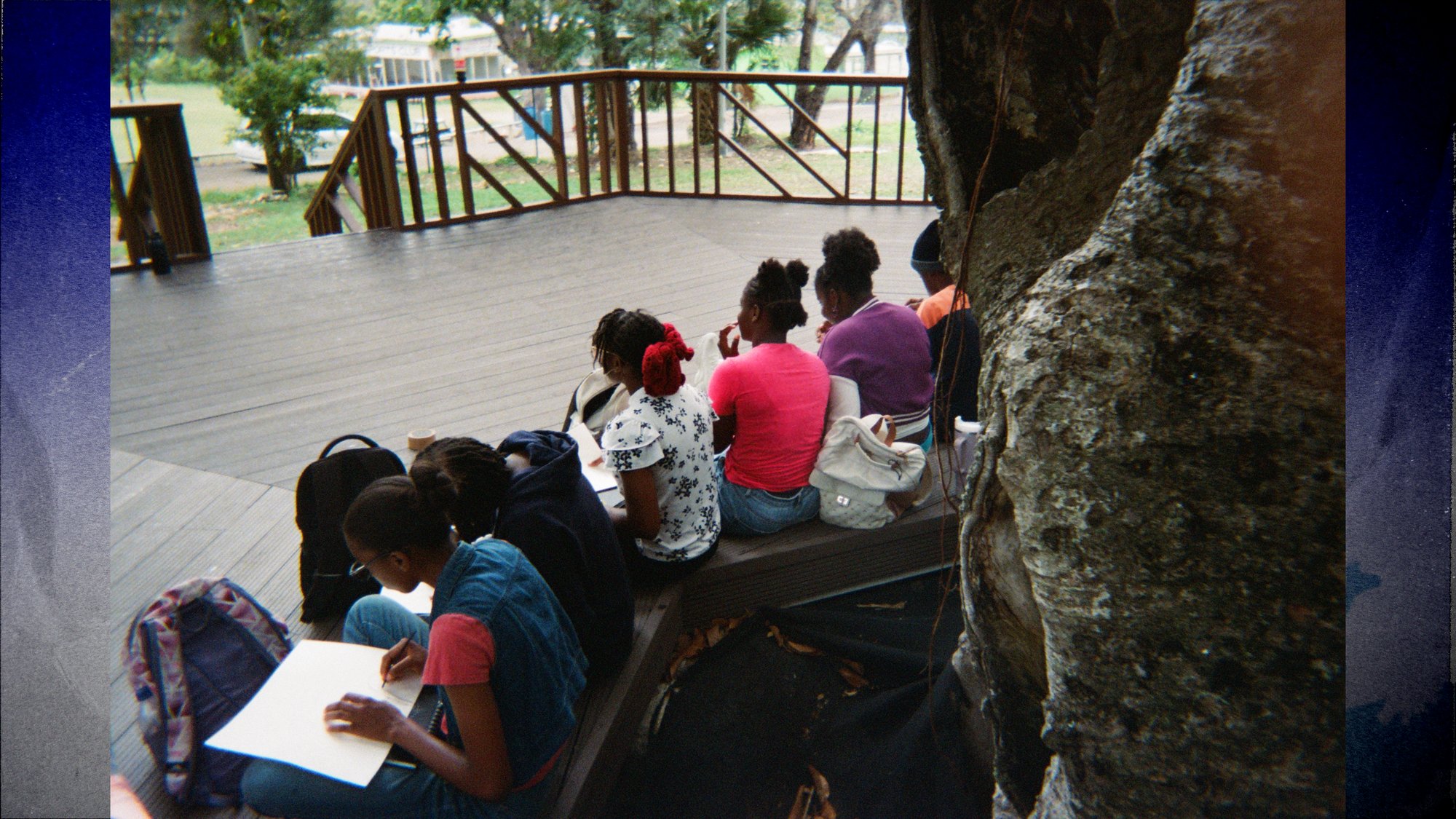
I took these thoughts back to the large-scale drawing that I was working on in my accommodation in Hodge’s Bay. 'Urgent Fury'; a procession into an uncertain and trepidatious future, away from a traumatic past. I brought with me, too, a feeling of optimism and excitement that was being generated in the classroom, as I watched the vibrant students I was working with engage the concepts of observational drawing. I was teaching them to see the world and capture it, but at the same time, the entire experience was teaching me to see myself, my heritage and the future in a new and hopeful light.