Designed for students aged 11–14 (UK Key Stage 3 / Years 7–9), but adaptable for other ages.
Learning objectives
Interpret and respond to the idea of using movement in your drawings and how to tackle the difficulty of translating moving forms into still images.
Exploring the use of animals as our models and how they differ in terms of anatomy, movement and presence.
Discuss and develop skills to feel more confident drawing in public and to draw a constantly changing scene from observation.
Learning outcomes
Several fast small drawings, of humans and animals, to warm up and loosen our drawing.
One more sustained drawing from an animal in the farm or a group of animals.
One long ‘panoramic’, ‘walking’ or two point perspective drawing, experimenting with showing movements of walking and crowds over time.
You will need
A small sketchbook you can carry outdoors
Pencils or charcoal
A long sheet of paper (for a panoramic drawing)
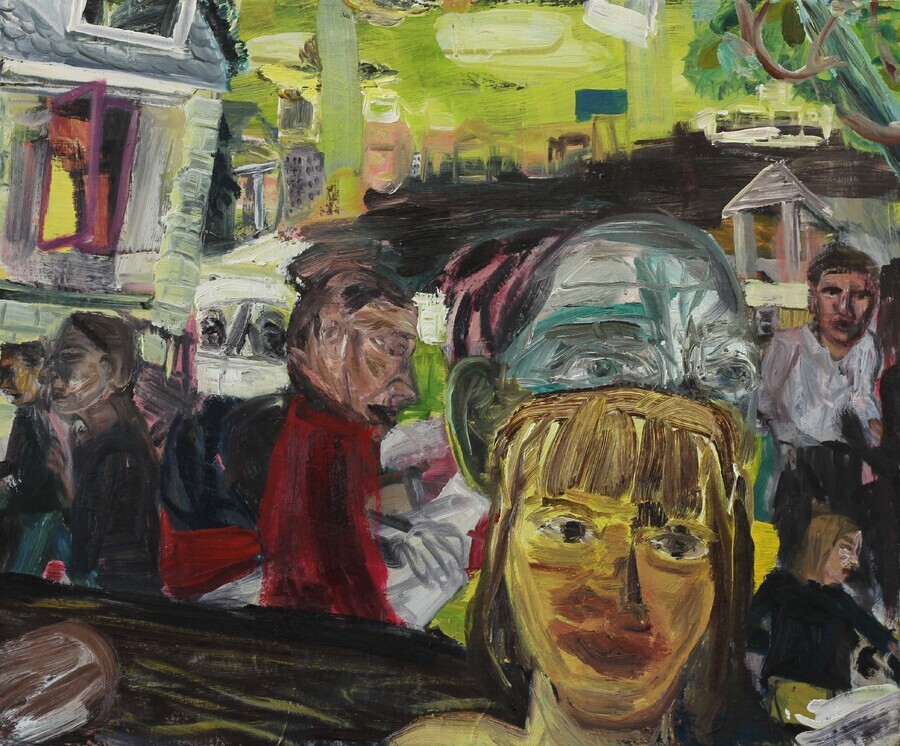
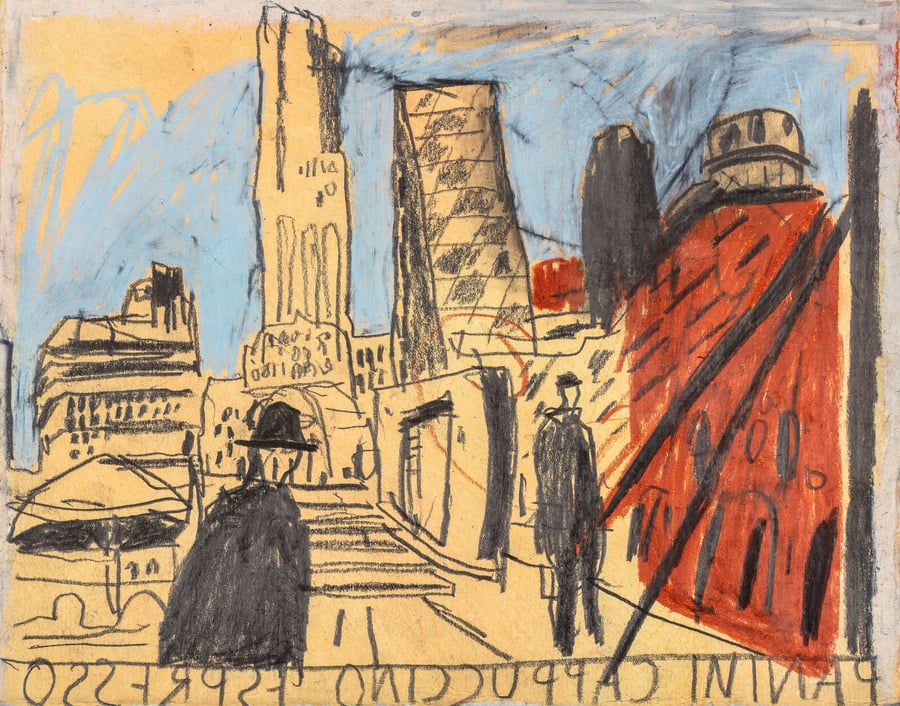
Otis Blease'Neros', Pencil on paper, 2020
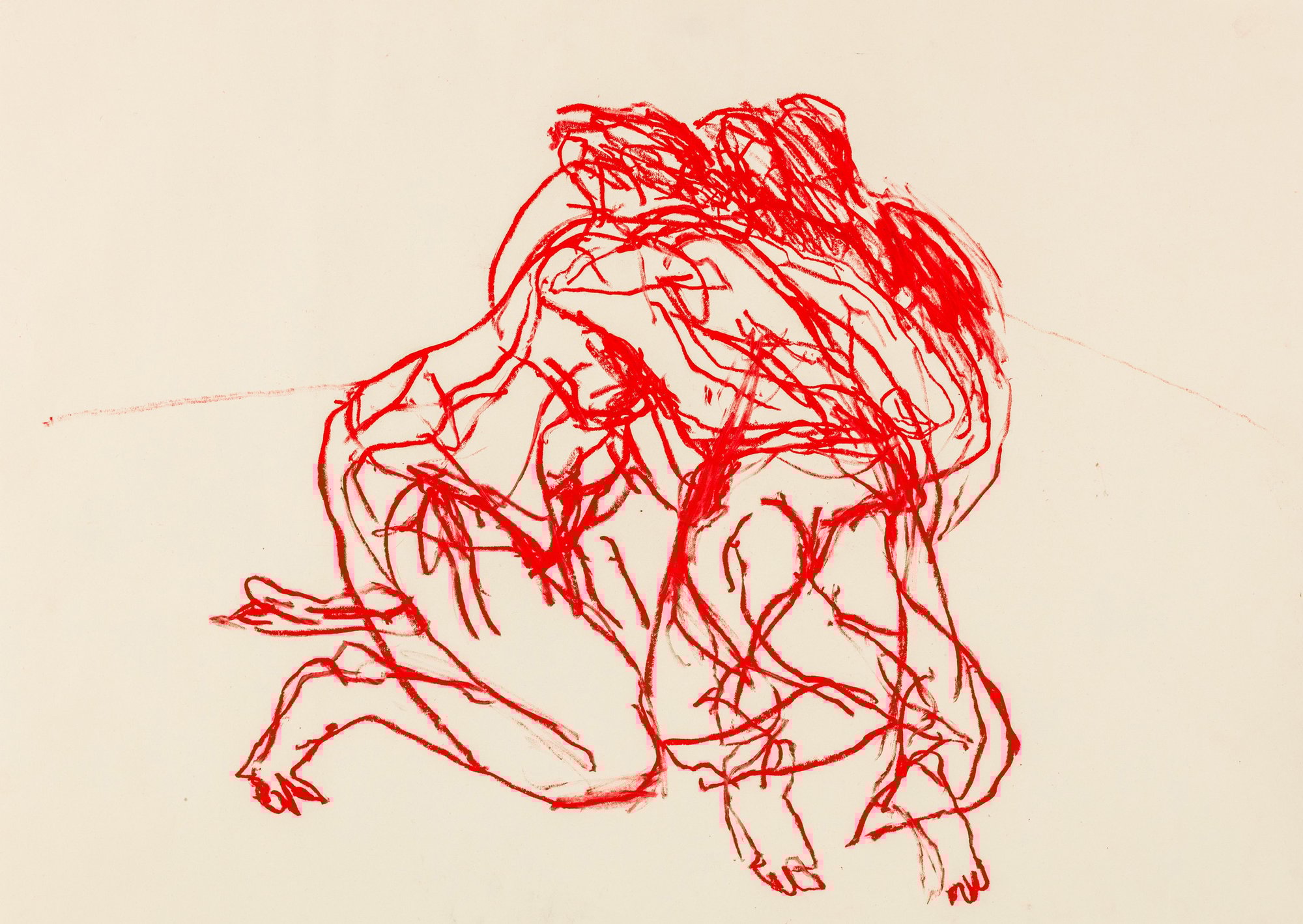
Nathalie Hollis'Red Wrestle', Oil pastel on paper, 2020
Introduction
This resource will introduce drawing the 'whole', everything you are seeing, while leaving behind the usual desire to get things right or correct.
This means drawing things that are moving, as we cannot ask a crowd of people or a flock of geese to stand still while we get their likeness right. To capture the whole of what we are seeing, we will need to interpret it rather than try to copy it exactly.
It can be difficult to get into this way of drawing, as it often begins as a complicated and sometimes unaesthetic mess on the page. However, if you keep going, you may start to find patterns and rhythms within that mess.
Exercise 1
Once you are outside, try to find people or animals in motion. Try to draw them in a way that suggests movement. This may include motion lines, scribbling, or smudging. Try not to judge what you have made but instead consider how movement is conveyed.
Exercise 2
On a larger piece of paper, create a longer drawing that contains movement. Include still elements such as a tree or building. These will contrast with the movement. Notice how you draw stationary things in contrast to the animals in motion.
Exercise 3
Finally, choose a spot where you have a good view to both your left and right. Starting on the left-hand side of the page, draw what you can see to your left. As you approach the centre of the page, draw what is in front of you. Finally, on the right-hand side, draw your view to the right.
This will create an abstract perspective that contains movement, so try to use any techniques you have discovered to portray movement.