Designed for students aged 14–18 (UK Key Stages 4–5 / Years 10–13), but adaptable for other ages.
Learning objectives
To work collaboratively
To draw from description
To consider the role of emotion and narrative on facial expression and body language
To place importance on looking and describing when drawing
To use observation to inform imagination
Learning outcomes
A drawing from a peer's description of a painting.
Three drawings of eyes and eyebrows
A sustained portrait
You will need
Pencils
Colour pencils
One large sheet of paper
Sketchbook
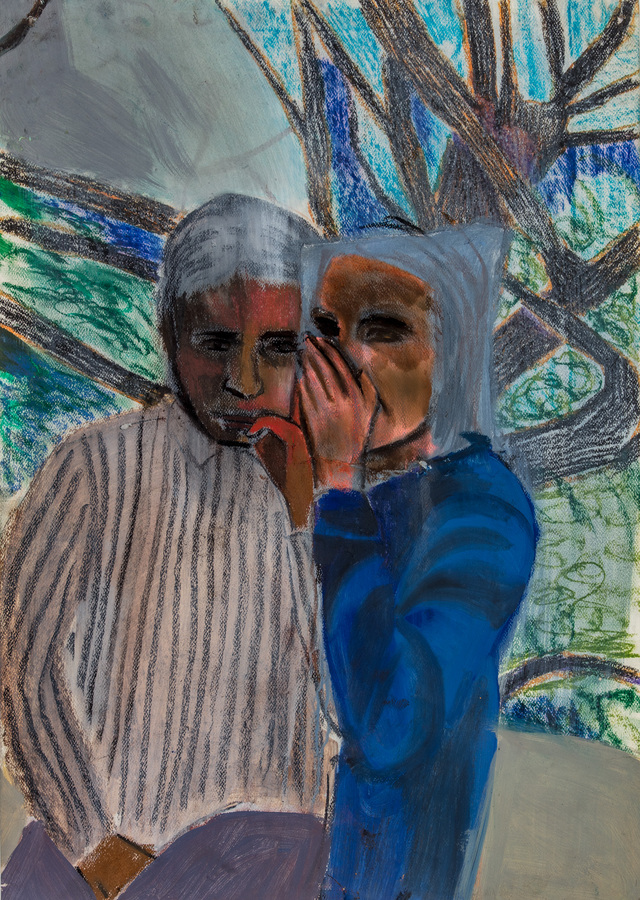
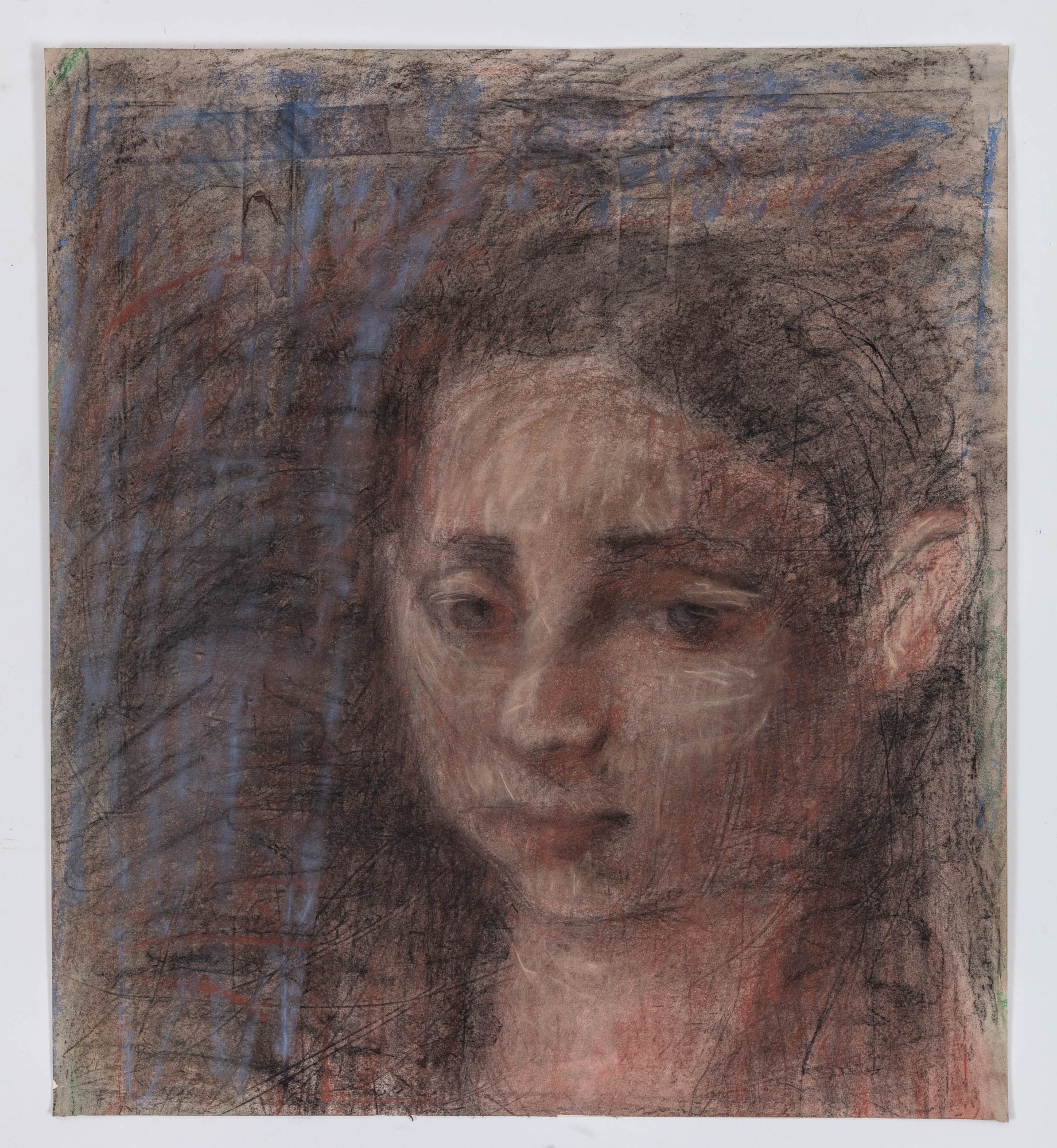
Rowley HaynesUntitled I
Ben WilliamsVoice Actor
Exercise 1
You will work in pairs. In your pair, one person will chose a painting and sit facing it while the other will have their back to it.
The student facing the painting will look and describe it in as much detail as possible, starting by describing the shape of the painting, how it is composed, what the figure in the painting looks like, is feeling, wearing.
The other student will draw it. They will then switch roles and repeat the exercise with another painting.
Exercise 2
You will build your own archive of facial expressions on a double spread, separating eyes and eyebrows as one category on one page and mouths, lips and teeth as another.
Exercise 3
You will write down an adjective describing an emotion or expression onto a loose bit of paper and fold it into a pile. Choose someone else's piece of paper from the pile.
Students will note down the word, along with their own words to describe what kind of portrait they want to draw.
For example, if you've picked up the word: “overjoyed”. On your sketchbook note down “overjoyed” and your own supporting ideas: “wide open eyes, big smile, dressed in a patterned top” everyone can chose to be as descriptive or broad as they would like.
Exercise 4
For the sustained drawing, choose a portrait from the gallery. You will draw this portrait from observation making sure the composition and likeness remains however you will change the portrait to match the word you have selected and described in the previous exercise. Experiment to see how vividly you can bring this new emotion to life.