Designed for students aged 11–14 (UK Key Stage 3 / Years 7–9), but adaptable for other ages.
Learning objectives
Explore the importance of symbolism in the history of art.
Engage with a painting by using it to fuel a personal vision.
Learning outcomes
One observational drawing of an artwork.
One imaginative drawing.
You will need
Two large sheets of paper
Pastels
Coloured Pencils
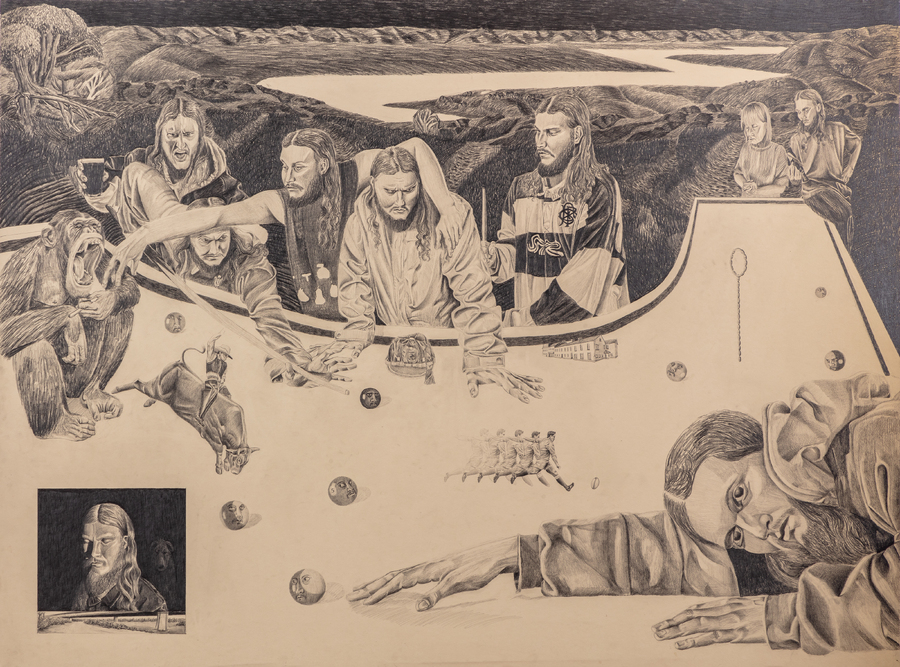
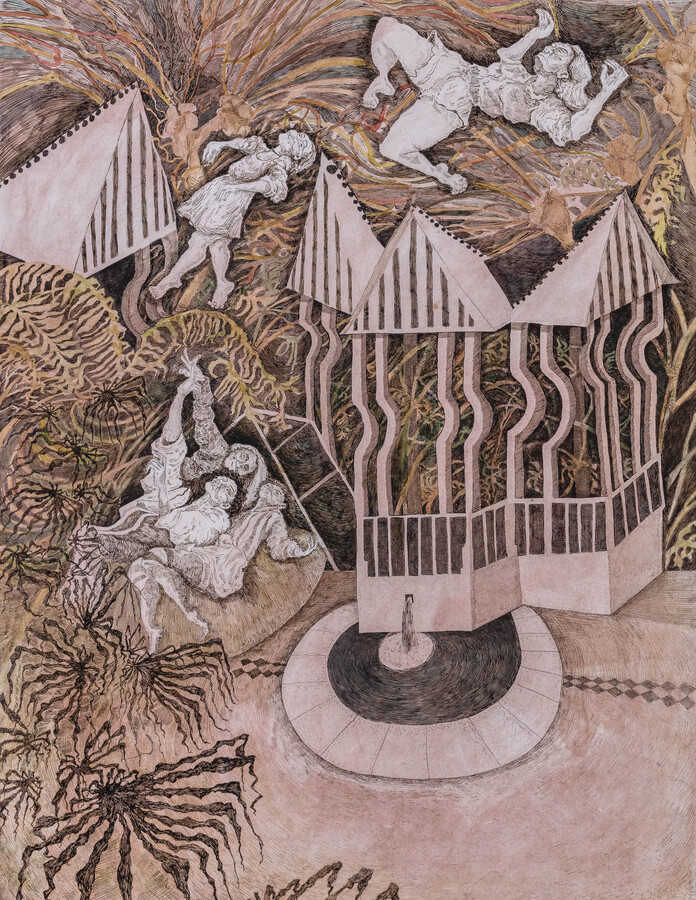
Alice LockhartBranches run between us
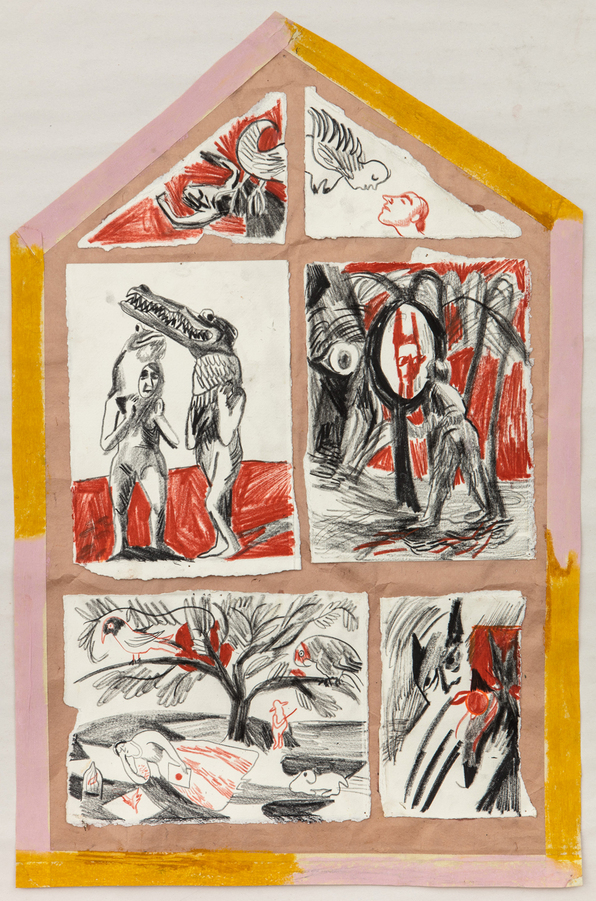
Katy PapineauOld Wives Tales
Introduction
Symbolism in art helps to tell stories without words. It also helps to identify key people and objects that are important to different faiths and belief systems. Both scale and colour are important in showing what is most significant in a work of art.
Exercise 1
Find a renaissance painting depicting multiple figures. Often this will show a group of saints, Jesus or the Virgin Mary. Draw this image in colour thinking about how the symbolism gives prominence to certain characters while telling a story. Which characters are in the centre and big and what colours are used for these characters?
In this drawing try to copy the composition as accurately as you can. This will be useful in the second half of the lesson.
Exercise 2
For your second imaginary drawing you will work from the same composition but with symbols and imagery that are important to you.
For example if there is a flag, you might want to change it to the flag of a country you are from or like. You might want to change the clothes of the characters into clothes that you like. Think about what people you want in your picture. It could be friends or family.
Many artists like to work with personal imagery and often the more unique an artwork is to a certain person the more viewers can relate to it.