
Introduction
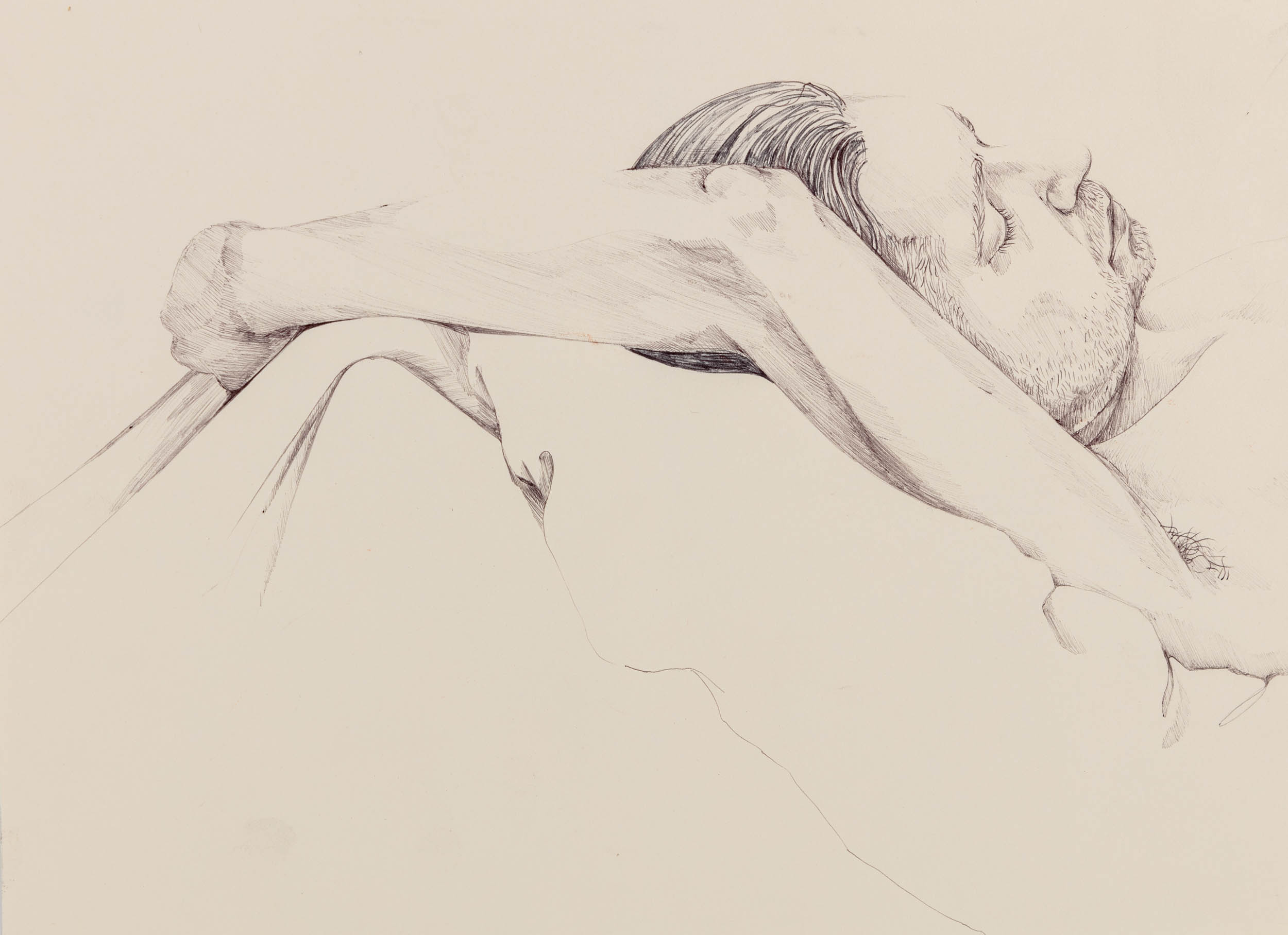
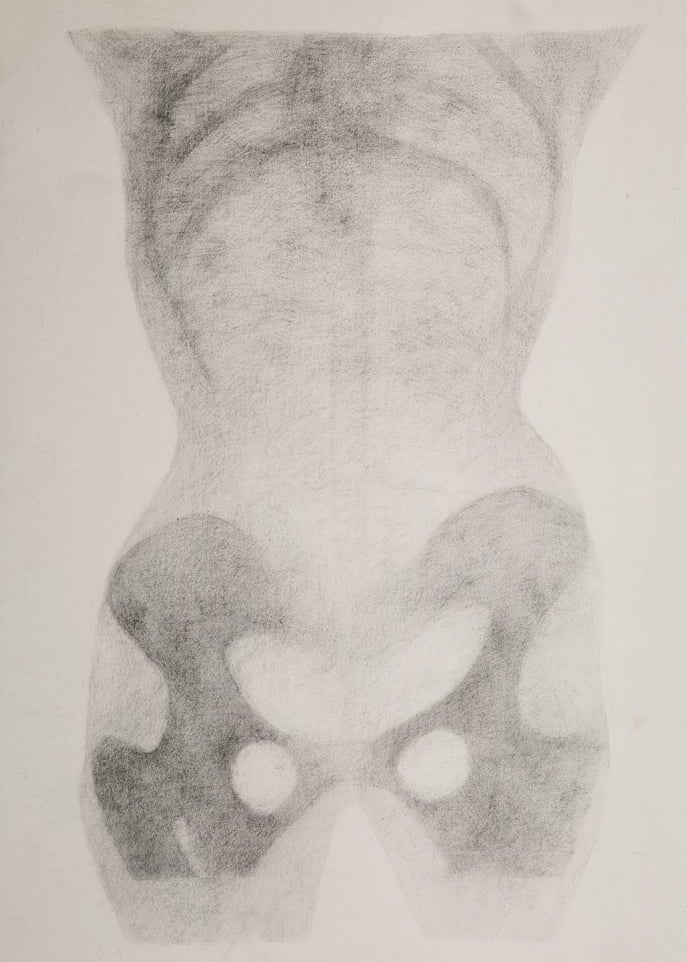
The ribcage and pelvis form the centre of the human body. In this lesson we will show you how to simplify these body parts to create anatomical drawings.
.png?width=1453&height=416&name=Screenshot%20(9).png)
The rib cage can be simplified into this simple egglike shape. Reducing the ribcage into this basic shape will give our drawings an anatomical structure.
The pelvis on the other hand can be simplified into a shape appearing like half an egg.
.png?width=1512&height=405&name=Screenshot%20(10).png)
.png?width=1271&height=377&name=Screenshot%20(11).png)
By describing the pelvis we are able to depict the flow and weight of a pose. The angle of the pelvis is normally in opposition of the angle of the rib cage.
Exercise 1
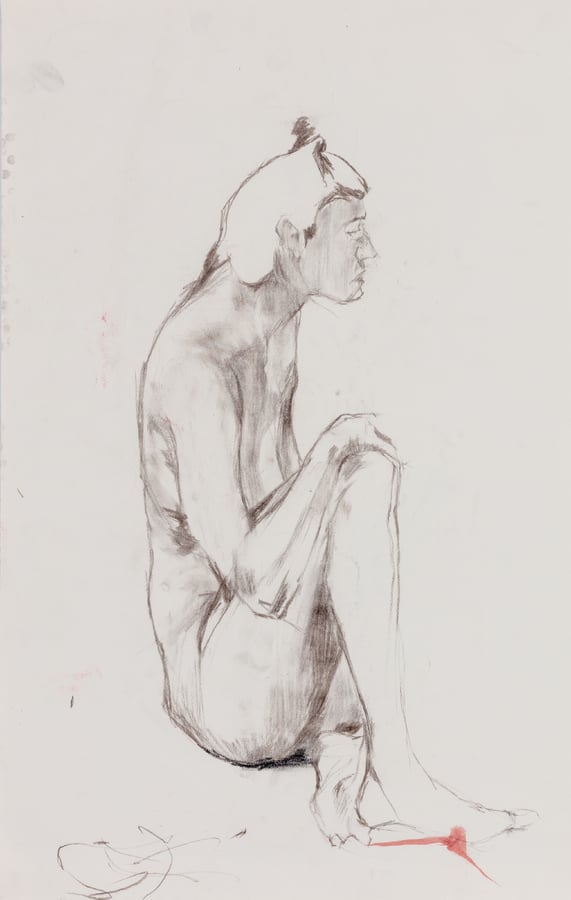
Position your model in a pose where one shoulder is higher than the other. This will create a noticeable difference in spacing: the ribcage and pelvis will be closer together on one side of the body and farther apart on the other.
-
First, draw the ribcage and pelvis as basic shapes using coloured pencil. This will establish the foundation of your composition.
-
Then, use a graphite pencil to fill in the rest of the body.
-
Repeat with two more quick poses. Each time, focus primarily on the ribcage and pelvis.
.png?width=637&height=677&name=Screenshot%20(12).png)
.png?width=1027&height=665&name=Screenshot%20(13).png)
Exercise 2
Now complete a longer pose. Again, try to choose a pose where the body is imbalanced.
This time, slow down and imagine you are drawing from the inside out. Consider the weight, direction, and tilt of the pelvis and ribcage first. Then complete the torso and and finally move on to the limbs.