Designed for students aged 14–18 (UK Key Stages 4–5 / Years 10–13), but adaptable for other ages.
Learning objectives
Study the anatomy of the horse.
Use knowledge of the anatomy to bring the drawing to life.
Illustrate the story of the trojan horse.
Learning outcomes
Anatomical study of the horse.
Imaginative drawing of the trojan horse.
You will need
Two large sheets of paper
Pencils
Eraser
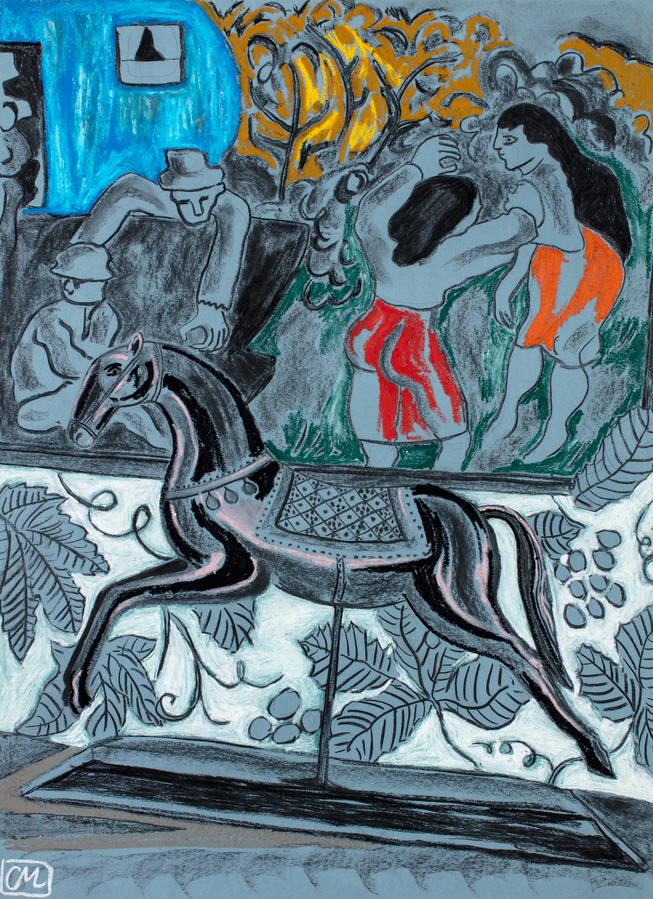
Christabel MacGreevyPink Horse and Blue Caravan
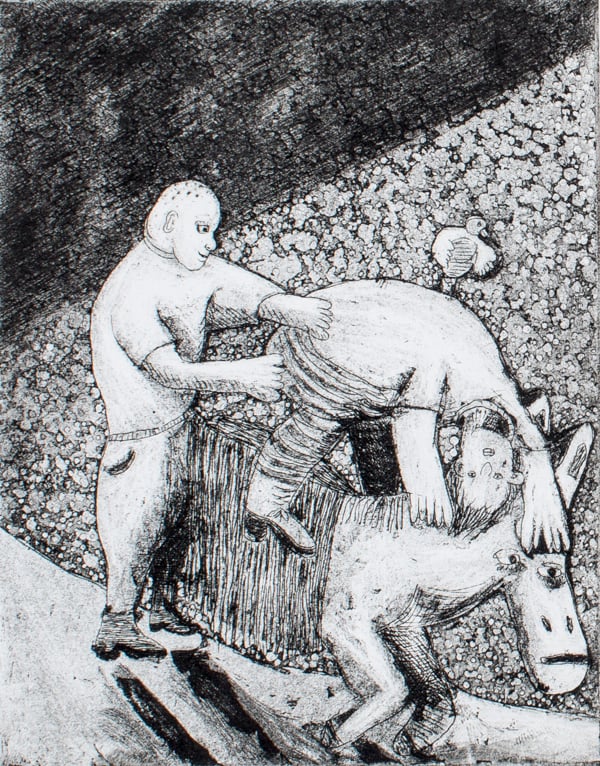
Alexander MiddletonHorse Costume
Introduction
The Trojan Horse is a Greek mythological tale of deception where, after a ten-year siege of Troy failed, the Greeks built a giant hollow wooden horse, hiding elite soldiers inside. The Trojans, believing it a victory offering, brought it inside their city walls. At night, the soldiers emerged and opened the gates, leading to Troy's defeat. The Trojan Horse is a symbol of cunning deception which has inspired artists and writers for many years.
Exercise 1
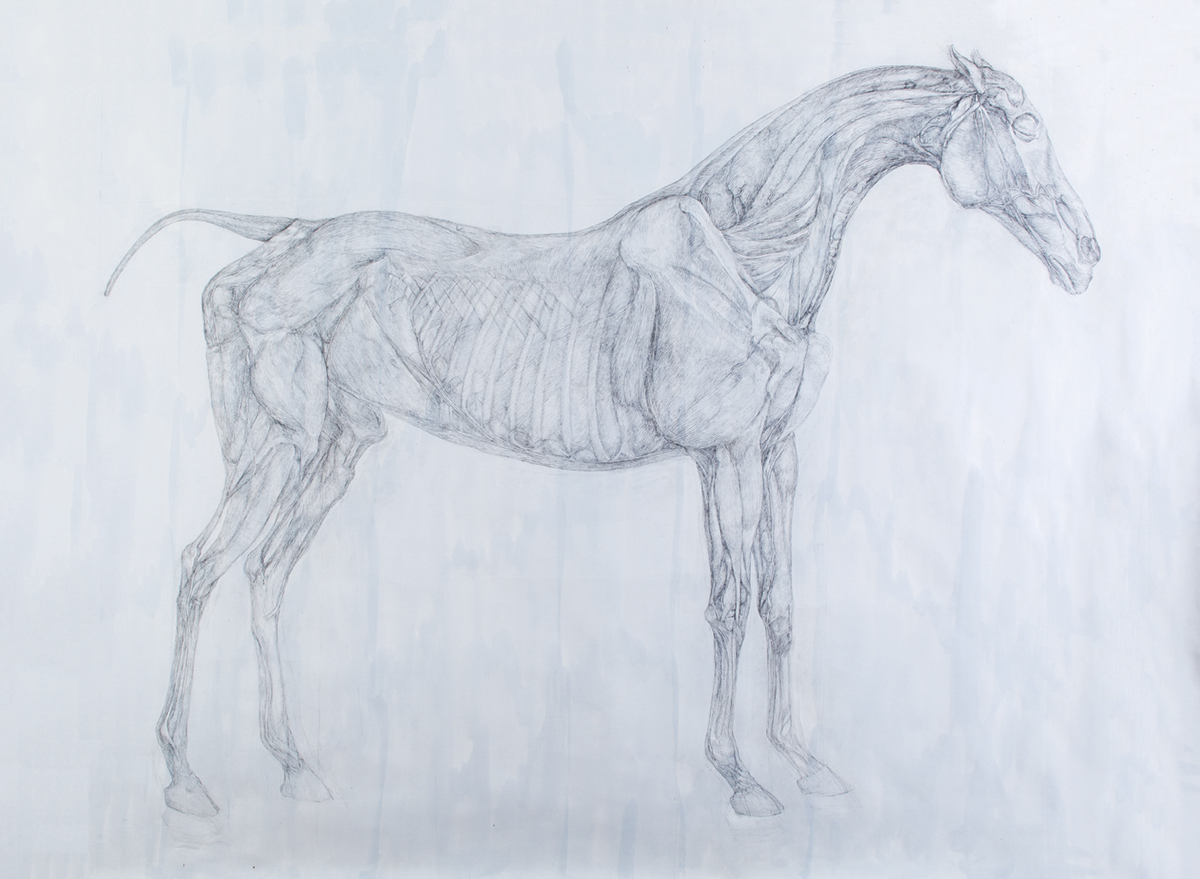
Look at the anatomical drawing of the horse at the top of the page. You can see how the essential form of the horse is divided into muscle groups and bones.
Copy this drawing as accurately as possible. While copying stay focused on how each muscle forms part of the horses structure. The more you understand the anatomy of the horse the easier it will be to work from imagination.
Exercise 2
Now you will draw from imagination what you think the Trojan horse might have looked like. Bearing in mind it would have to be big enough to store many soldiers and was also made out of wood. Use what you have learnt from the previous anatomy drawing as a basis to build upon using your imagination.
This is a story of war and deception so try to make your drawing dramatic.