Designed for students aged 14–18 (UK Key Stages 4–5 / Years 10–13), but adaptable for other ages.
Learning objectives
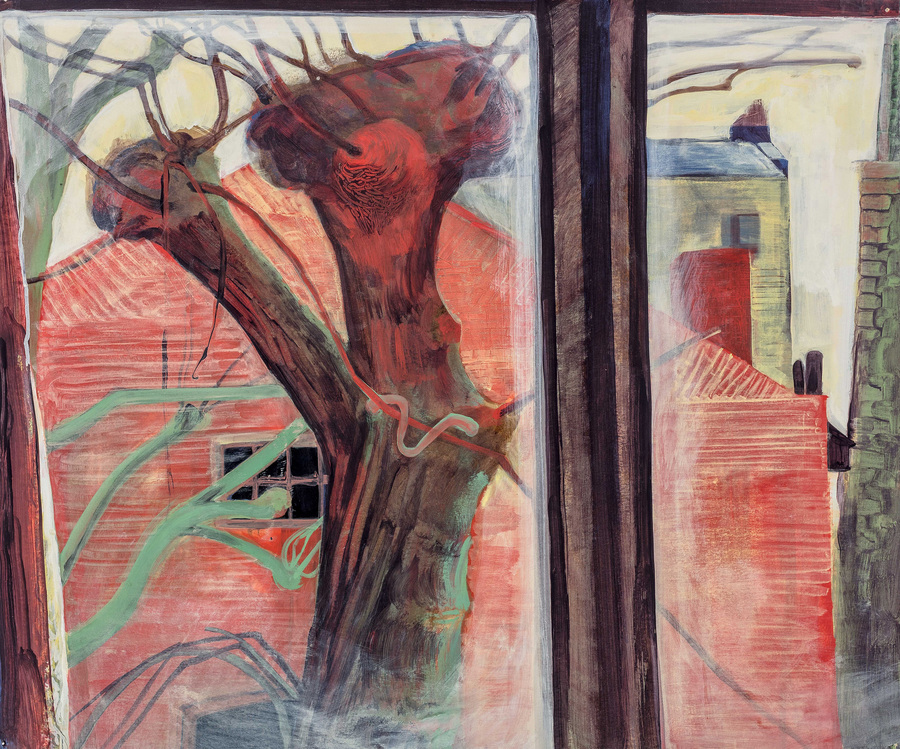
Create drawings that fuse imagination and observation by using the window as a tool to distinguish between worlds – the imagined/remembered and the observed.
Use your materials to distinguish between inside and outside.
Bring elements of imagination and memory into your drawing through the window.
Learning outcomes
Two fast-paced studies exploring positive and negative space, drawing from objects in our surroundings.
An abstract collage composition, using organic and geometric shapes.
A figurative collage composition, using mixed media (layering shapes and mark making).
You will need
Pencils
Pastels
Charcoal
Paper of different sizes
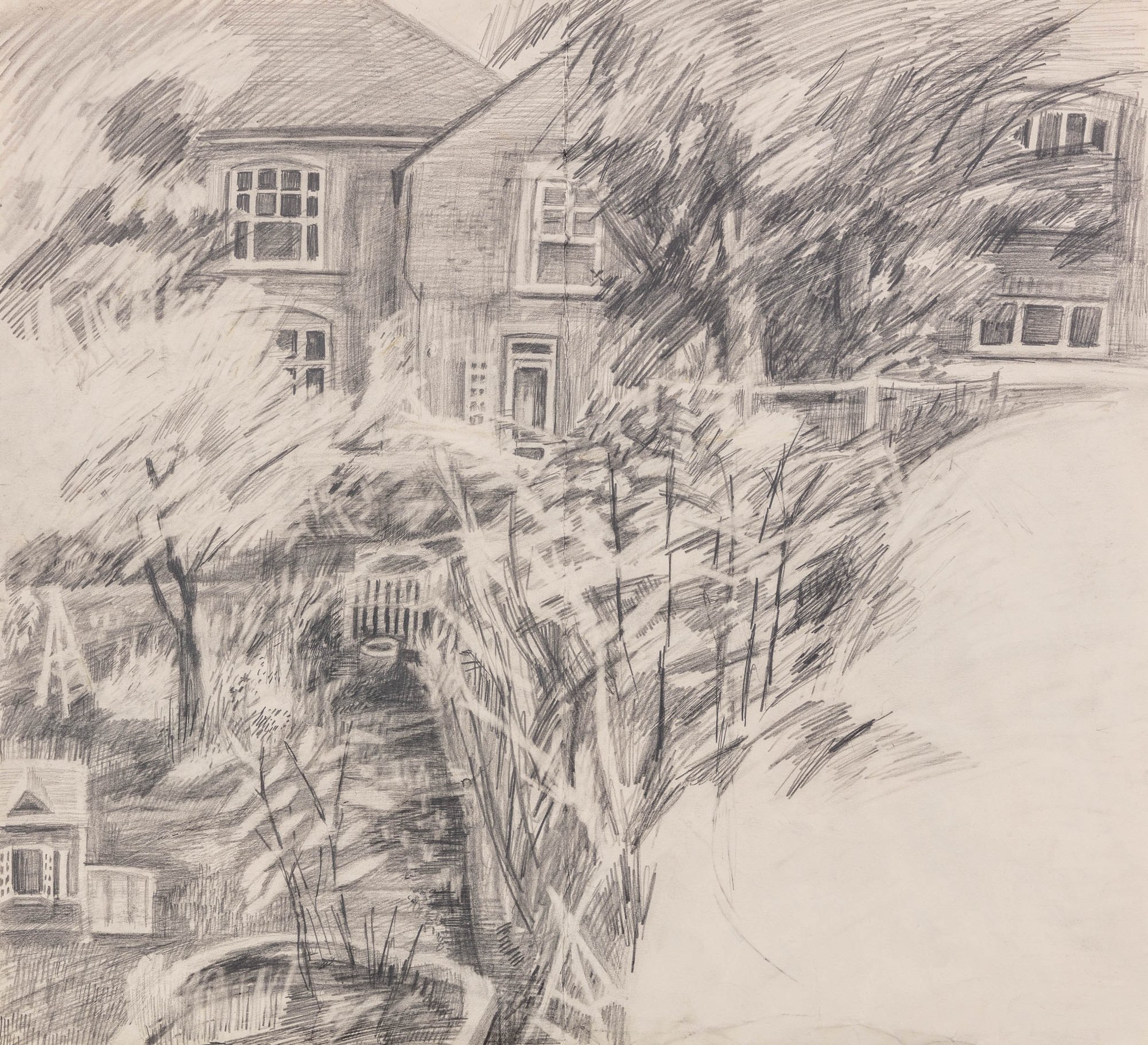
Ellie Lonsdale'Window Watching', Pencil on paper, 2023
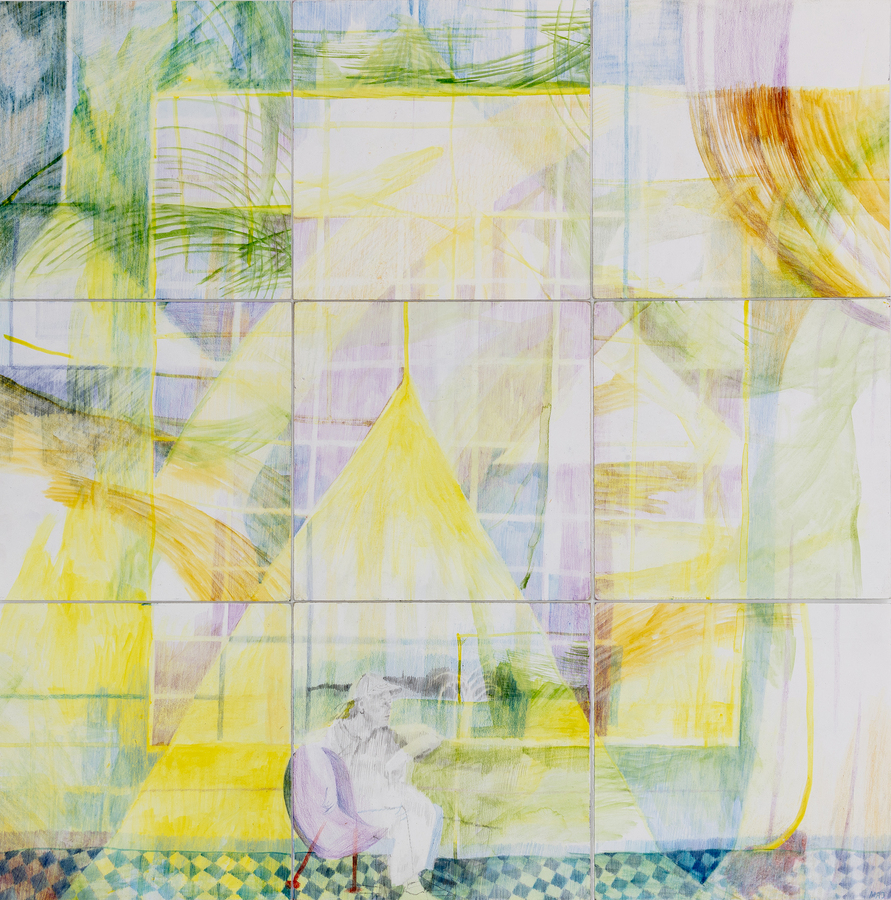
Maj Lisa Dorig'Woman without a dog', Watercolour and coloured pencil on paper, 2024
Exercise 1
Think about the tonal contrast inside and outside, and what this can do to create a distinction between the two types of space. For your first drawing, make the tonal contrast inside much stronger, and outside much softer.
Exercise 2
Draw a window nearby but include a figure looking out. It could be that you are imagining yourself. Think about layers, and changes in scale. You might have a large person outside and a small person inside to subvert convention. The figures really help create a sense of depth. You might have a figure transgressing the boundary between inside and outside.
Exercise 3
Working in pastel or charcoal, I would like you to start sketching out your view, looking out the window and looking in all different directions if you can – up, down, side to side. This kind of non-traditional approach to space allows imagination to begin to slip in.
Use a big piece of paper in landscape format, so that you can expand outward if you need to.
After five minutes begin to imagine that something is different. It could be that it is night-time when it’s daytime, it could be that it is sunny when it’s cold, it could be that your colours are much brighter than what you see.
How might you use your materials to give a sense of the imagined atmosphere you are creating?