Designed for students aged 14–18 (UK Key Stages 4–5 / Years 10–13), but adaptable for other ages.
Learning objectives
Experiment with ink dilution, brush loading, and paper preparation to control tone and mark-making.
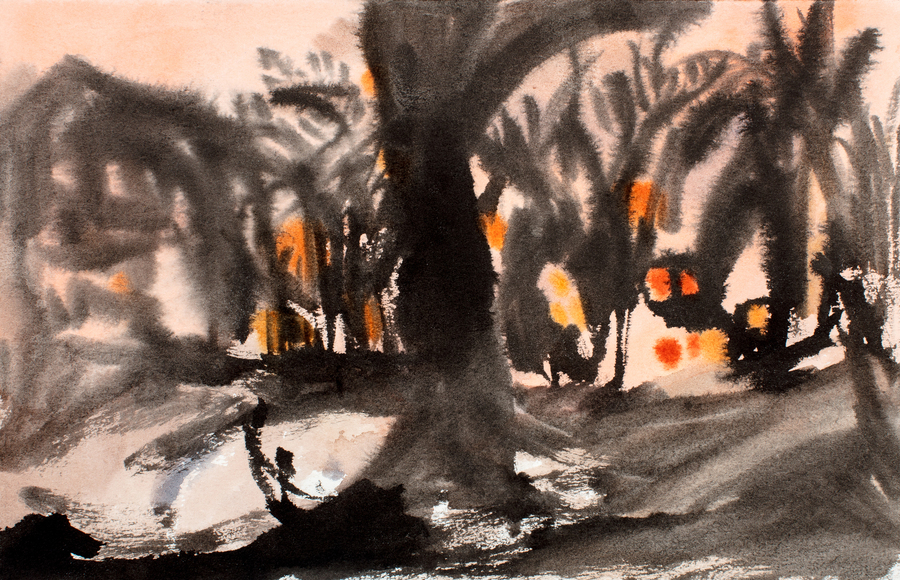
Apply principles associated with 'Yūgen' (suggestion, atmosphere, restraint) by taking inspiration from Japanese ink painters of the 10th–14th centuries.
Learning outcomes
Produce a short ink study demonstrating a range of mark-making techniques and tonal values.
Produce a sustained ink drawing that uses tone, negative space, and composition to evoke an aspect of 'Yūgen.'
You will need
Ink (e.g. India ink or sumi ink)
Water
Two brushes (different sizes or types)
Three water containers (clean / mid / dirty)
Paper of various thicknesses (for testing and final work)
Palette or small dish for ink dilution
Absorbent cloth or kitchen roll
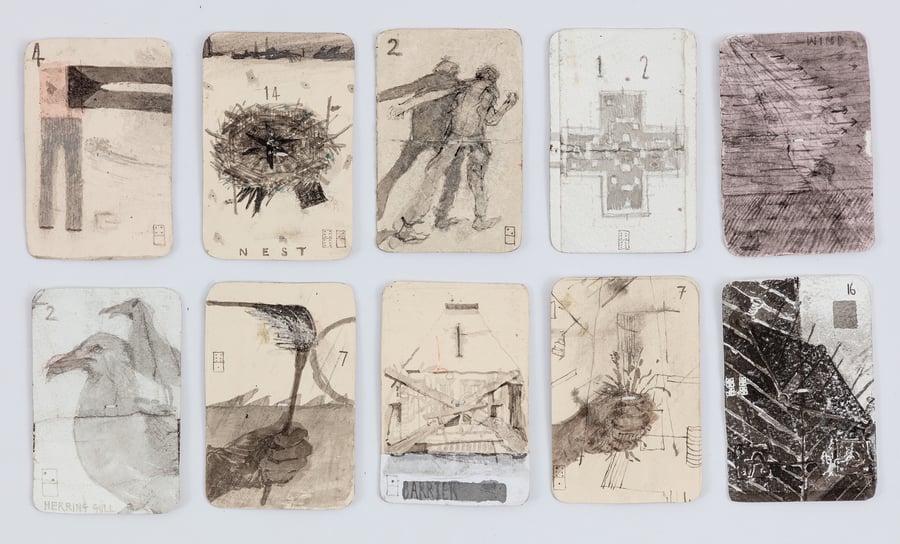
Daniel C Turner'Cards II', Ink on laminated paper, 2024
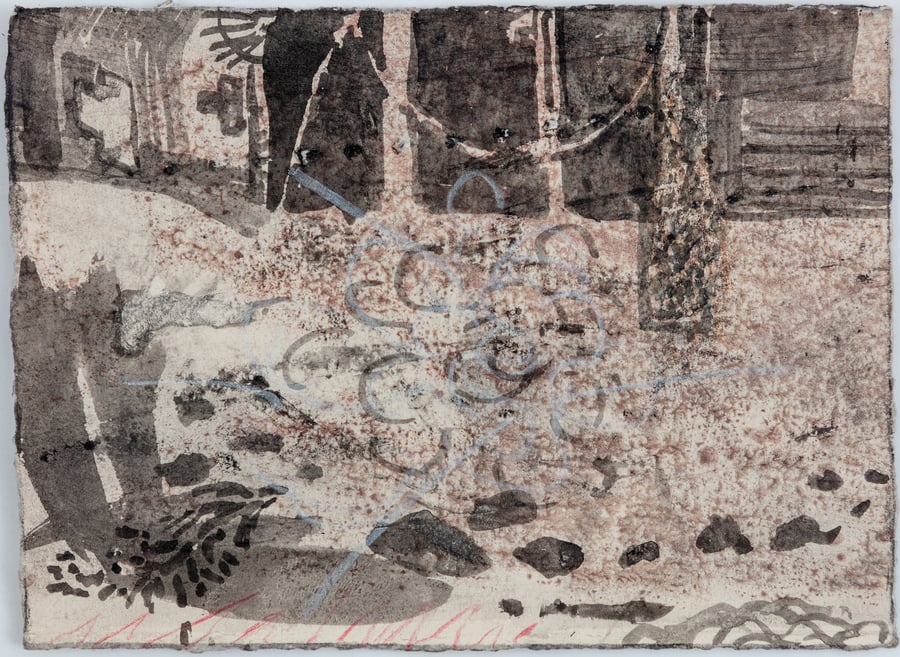
Daniel C Turner'Flies (Rotherhithe)', Ink and pencil on paper, 2024
Introduction
Yūgen (幽玄) is an important concept in traditional Japanese aesthetics. It is often understood as a profound awareness of beauty that cannot be fully put into words.
The exact meaning of yūgen shifts depending on context, but it is closely associated with subtlety, shadow and the unseen. Artists have long explored this elusive state of mind through ink, using diluted washes and quiet marks to suggest what is felt rather than directly described.
This resource will guide you and your learners through simple ink exercises, exploring how tone can create atmosphere in a drawing.
Preparation
Before you begin, please prepare your inks in three separate containers:
One should be pale consisting of mainly water and a small amount of ink.
The next should be a medium strength ink consisting of a ratio of half water to half ink.
The third container should be mainly ink and only a small amount of water, this will be your deepest tone.
Exercise 1
Experiment with the ink in a gestural abstract way. If you have a variety of paper, see how the ink sits differently on thick and thin paper. If possible, it is also preferable to have two brushes, one which is soaking wet in the various inks while the other is kept dry with paper towels when not in use.
Experiment with how the wet brush flows across the paper while the drier brush creates shorter fewer fluid marks. Try to see how the inks bleed into each other. How various tones can be created and how the paper reacts when the ink begins to pool creating abstract areas.
Exercise 2
To begin working from observation please create a still life with strong tonal contrasts. If possible, use a lamp or strong light to create shadows. This will be a quick fifteen-minute sketch to capture the scene. Start with you palest tone to create the shapes, think about where the darkest and lightest tones sit. Next fill in your mid tones and finally fill in the darkest tones.
Exercise 3
Now you have experimented with a shorter fifteen-minute drawing exercise, reflect on whether you would like to change the strength of any inks. To finish the lesson do a longer study, perhaps twenty or thirty minute drawing, of the same subject matter. This time allow yourself to slow down and take in the subject matter. Allow sections to dry if necessary and gently build your tones.